
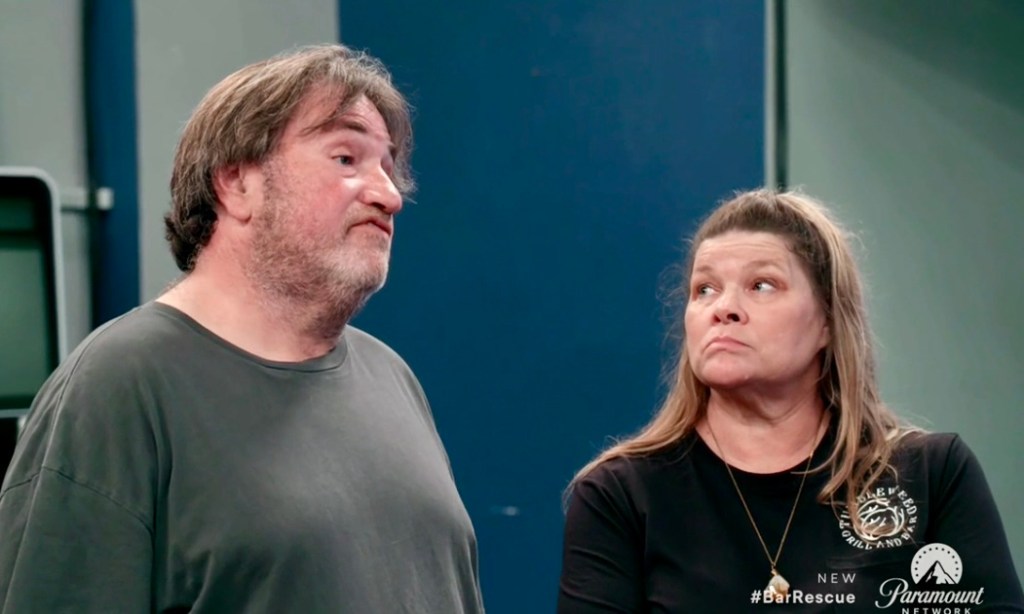
In my least favorite episode of Bar Rescue ever, Jon entrusts hospitality prince Dustin Drai with the monumental task of rescuing The Tumbleweed Grill and Bar in Apache Junction, Arizona. This episode is a rollercoaster of emotions, not just for the bar’s owners, Alan McWhorter and Teresa Higgins, but also for those of us watching and rooting for this small-town bar to succeed. Unfortunately, despite the efforts of Dustin and the team, the story doesn’t have the happy ending we all hope for.
Opening The Tumbleweed Grill and Bar was Teresa’s idea to transition her husband Alan into running his own business instead of working tirelessly for others. Alan, who is a manager for a local convenience store, was initially supposed to leave his job and focus on running the bar full-time. However, due to financial pressures, he continued working at the convenience store, leaving Teresa to manage the bar largely on her own. Teresa has no experience or understanding of what it takes to manage a bar, and we can see just how lost she is in the introductory segment. As the novelty of being the new place in town began to wear off, the customers stopped coming, and the bar started losing money at an alarming rate. Poor bartender Brandi loaned the couple twenty thousand dollars from her 401k retirement fund that she is realizing is likely never going to be paid back.
To help, Jon sends Dustin Drai to turn The Tumbleweed Grill around. Dustin, with his background in running one of Las Vegas’s most successful nightclubs, seems like the perfect person for the job of rescuing this bland little place in the middle of nowhere, Arizona. I guess. But as the episode unfolds, it becomes clear that the challenges are much deeper than just fixing the menu and the décor and putting in systems, so Dustin has his hands full.
From the start, it is apparent that the bar’s issues are multifaceted. The lack of clear signage makes it hard for potential customers to even know what kind of establishment The Tumbleweed Grill is. Inside, the bar has no identity, lots of diamond plating, and a dull and lifeless atmosphere that does nothing to invite customers back. It actually reminds me of a larger version of the “dining area” that some convenience store/gas station setups have for their customers to eat indoors. Mmm. Add this to the fact that the bar is located in a small town with a population of 9,000 people, and we understand that every lost customer is a significant blow because there’s no new customers to replace them.
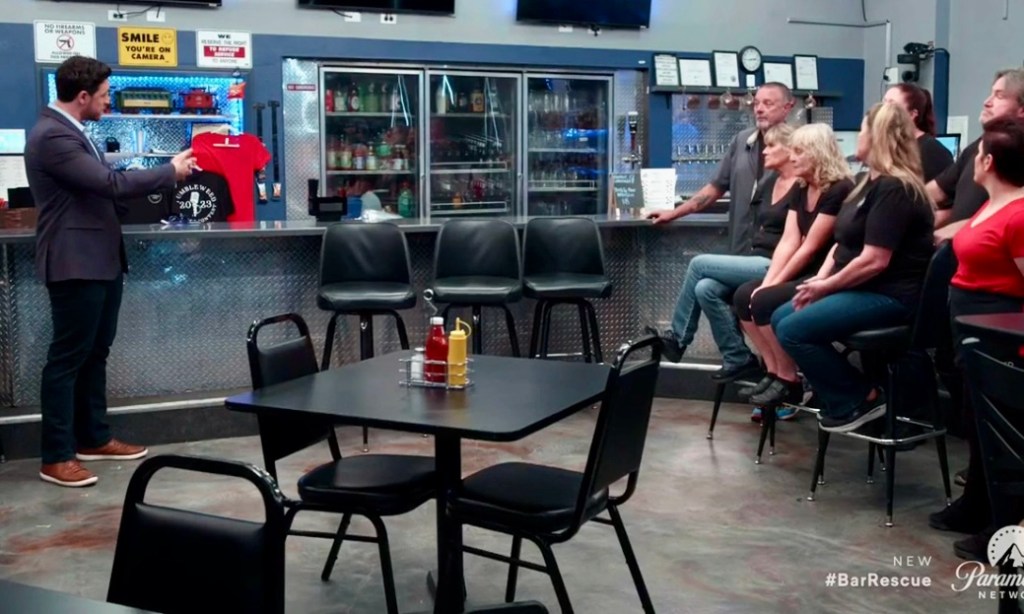
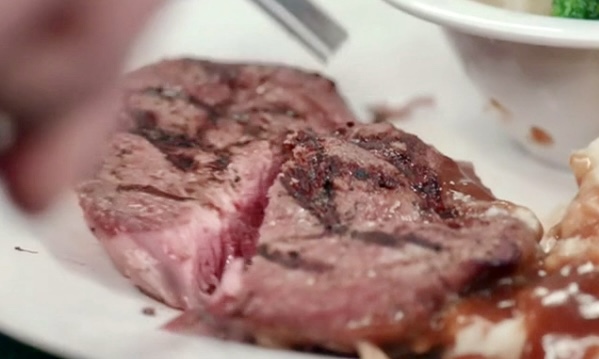
The recon night is particularly eye-opening. The bar’s staff, while well-intentioned, are woefully unprepared. The bartenders don’t know how to make their new cocktails, and the kitchen, run by Chef Jack with 40 years of experience, is churning out poorly cooked (aka raw) food. The sight of a steak being flipped before it even has a chance to sear properly is a stark illustration of the incompetence in the kitchen. The recon team, including Dustin, can barely stomach looking at the food, and the drinks are no better.
Dustin, stepping into Jon’s shoes, tries to address the issues head-on. He confronts Chef Jack, who stubbornly defends his undercooked steak, showing no willingness to accept responsibility or learn from his mistakes or even recognize that a mistake was made. This is a critical moment because Chef Jack throws in the towel and quits. Dustin tries to get him back but doesn’t succeed. Chef Jack gives an Emmy-worthy performance defending himself, and later you’ll hear why I think that was the fatal flaw in this bar already on the brink of failure.
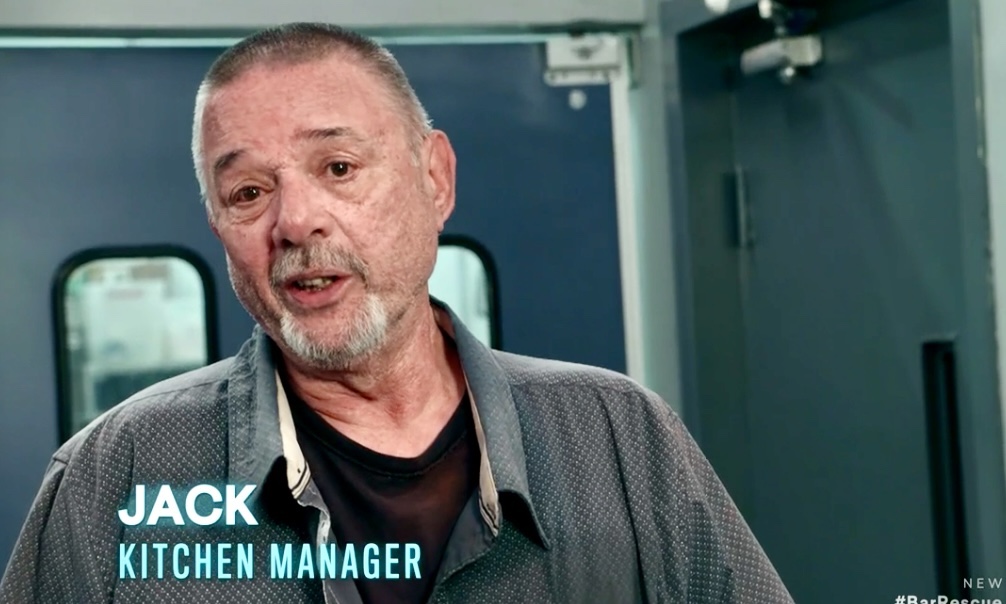
One of the most frustrating aspects of this episode is seeing Chef Jack’s lack of accountability. When the issue of the undercooked steak is brought up, instead of acknowledging the mistake and working to fix it, he dismisses the complaints, essentially shrugging off the responsibility. This attitude, as Jon would likely say, is a recipe for disaster because you cannot expect to achieve different results while continuing to do the same things. If Dustin had focused on the chef’s ability to change and make better food, rather than solely criticizing the mis-steak made during recon, they might have been able to turn things around. But Dustin, while competent, lacks Jon’s interpersonal savvy and failed to clearly show Chef Jack the path forward.
The stress test is another disaster, highlighting the bar’s operational weaknesses. Orders are backed up, and the kitchen struggles to get food out in a timely manner. The energy behind the bar is chaotic, and the staff struggles to keep up with basic tasks. The new cook, Justin, who stepped in after Chef Jack walked out, does his best, but the issues run deeper than just one person’s efforts can fix. Dustin said the one and only thing he didn’t want to see tonight was a raw steak, and lo and behold, a raw steak makes it to the customer. Uh oh.
Dustin fixates on the life-altering transgression of sending out a raw steak while simultaneously trying to support the new chef, which he does very well. Still, he beats the raw steak into the ground like a dead horse trying to get the owners to see that they couldn’t manage to prevent the very simple problem of serving a New York strip as steak tartare.
Despite the hard work put in by Dustin and his team, the underlying problems persist. The owners, while committed, seem overwhelmed by the sheer magnitude of what needs to be done. Alan, finally having quit his job to focus on the bar full-time, tries to step up, but the damage of letting Teresa run the bar alone for so long has already been done.
In the end, Dustin and his team rebrand the bar as the Gold Rush Saloon, tapping into the area’s historical ties to the old west. The redesign is beautiful, and the new menu, featuring simple yet high-quality dishes like fish and chips with a pea garnish and a beautifully crusted New York strip, is a significant upgrade. The bartenders are trained to make classic cocktails with a modern twist, such as the Candied Pecan Old Fashioned, which actually sounds delicious to me. If they do it right, it could be the go-to place in their town.
However, despite all these efforts, it is clear that the bar’s fate is hanging by a thread. The owners are still grappling with their financial troubles, having mortgaged their house and maxed out their credit cards to keep the business afloat, and although the staff shows improvement during the relaunch, the question remains whether they can maintain the new standards set by Dustin and his team. I lived in a small town for a while once and a bar/restaurant with a good reputation was quite the draw because there isn’t a lot of competition to choose from. The other side of the coin, though, is that when you suck, everybody knows it and the small town grapevine carries the kiss of death.
I usually don’t look up whether a bar has succeeded or failed before I write my recaps, but I made an exception this time because I was really rooting for The Tumbleweed Grill and Alan and Teresa. Sadly, I discovered that the bar closed not long after the episode aired. While this disappointed me, it didn’t surprise me. The bar’s decision to revert to its old name and ways after Dustin left was a clear sign that the changes hadn’t taken root. They even took back Chef Jack, who wasn’t present for the training and who surely continued to do things his own way like he swore up and down he would do because thats the way they do things there. This move was a fatal mistake, I think—one that likely sealed the bar’s fate because, anecdotally, it seems to me that when a bar reverts back in name, offerings, décor, and/or employees (especially a shitty chef), it rarely, if ever, succeeds. As Jon points out one way or another every episode, you cannot continue to do the same things and expect different results.
Dustin, while well-intentioned, doesn’t have Jon’s ability to push people to see the importance of change. He lacks the force of nature that comes with the principled decision making and analysis Jon demonstrates episode after episode—and the clout that Jon brings to confrontations. I’m talking about the kind of commanding riz that gets people to not only accept the reality of their situation but also commit to doing what’s necessary to fix it. Jon gets people to believe he will help them if they just surrender to his guidance. Dustin, not so much.
Dustin should have left Teresa and Alan with a copy of Jon’s books, Raise the Bar and Don’t Bullsh*t Yourself! Perhaps then they could have leaned on Jon’s wisdom and guidance long after the cameras stopped rolling.
Teresa’s initial idea of putting their efforts into their own business rather than someone else’s was a good one, but she was naive about what it would take to make it a success. It’s a sad reality, especially in rural areas where economic opportunities are scarce, that even the best of intentions can fall short without the right support and expertise.
In the end, Tumbleweed Grill, like many others, couldn’t survive despite the rescue attempt. The bar’s closure serves as a sobering reminder that owning and running a successful bar requires more than just desire—it requires a willingness to change, adapt, and sometimes, to trust in the person Jon sent to help you as though it was Jon himself who showed up.
I can see why Jon chose Dustin as the guest host. Dustin’s status as hospitality royalty and Jon’s wonderful habit of lifting up those who cross his path seem to intersect perfectly here. Dustin has the skills and know-how to run a multi-million-dollar club—that’s no small feat. But here’s where we see the brilliance of Jon’s philosophy about hiring for traits, not just skills. While Dustin brought his expertise to the table, Jon’s unique ability to get failing people to trust him to take them to task in a nuanced, loving way that breaks them down only to lift them up is truly a rare gift.
Dustin gave it his all, and I give him credit for trying, but in the end, Jon is just too illustrious—both in business and in how he connects with people. There’s a certain magic Jon has, an almost instinctual understanding of human behavior, that can’t quite be matched, and definitely can’t be taught. It’s not just Jon’s knowledge or experience; it’s his willingness to give his heart and soul to evoke trust and inspire real, lasting change in the people he serves. As Jon always says, it’s never just about rescuing bars—it’s about rescuing the people and families behind them. Good luck finding a replacement for that kind of illustriousness. Just sayin’.
I invite you to consider and share your answers in the Comments: What are your thoughts about a replacement for Jon? Is it possible, or is Bar Rescue synonymous with Jon and no one could ever take his place?

 In Good Spirits
Leave a comment