

I have a spot in my mind that I call my “mental parking lot.” It’s where I put things that I’m not ready or able to process—ideas, comments, events, and even things that disturb or challenge me deeply. This space is invaluable, allowing me to revisit and work through those things when the time is right, when I can give them the attention they deserve.
Sometimes, I look out the window of my mind and into this imaginary parking lot, way in the back, in a shady spot in the corner where no one else parks because it’s so far away, and I wonder if I should go get the keys to take the incident that’s sitting there out for a spin. As Jon has said, it’s not about avoiding conflict but about engaging with it constructively, and that takes the right time and place. So here I am, finally ready to take the situation out of the parking lot and onto the road to see what she’s got. Any chance you are up for a ride? I’ve got Neil Diamond. (IYKYK)
For the past three years, something Jon said has been sitting in my mental parking lot, bothering me more than I want to admit. It was during an interview on The Ingraham Angle back in August 2021. The discussion was supposed to be about the challenges faced by the hospitality industry due to the pandemic, but it spiraled into a controversial comparison that left many, including myself, deeply troubled. Jon suggested that if we made people “hungry,” much like military dogs, they’d be more eager to return to work, seeming to equate the unemployment benefits they were receiving to feeding those dogs. This article on The Wrap by Alex Noble has everything in one place without a whole lot of commentary.
There were three things about this event that really bothered me. First, Jon suggested a trickle-down approach to distributing unemployment benefits. Regardless of the merits of such a proposal, I found it dismissive of the capabilities of everyday people to understand the needs of their families and lives and how to best take care of themselves during such uncertain, if not turbulent, times. This sentiment goes against my beliefs in equality and the inherent value of every person.
Secondly, Jon likened those receiving benefits to military dogs, implying that they needed to be starved to become more obedient. This was a shocking comparison to me because, again, we live in a society where people are free and equal, and being treated like or compared to a dog is not consistent with those democratic values, which, of course, are my values, too.
Lastly, Jon’s apology upset me. While I understood that Jon was clarifying his intent, indicating that he didn’t mean what he said, I found myself wishing for a deeper acknowledgment of the impact his words had on people like me. He essentially claimed he made a mistake, yet Jon is known for saying, “There are no mistakes, only choices.” His messages of accountability are powerful and clear, and they apply to apologies too, as he has made evident on Bar Rescue when he forces owners to apologize to their staff, partners, parents, children, and customers.
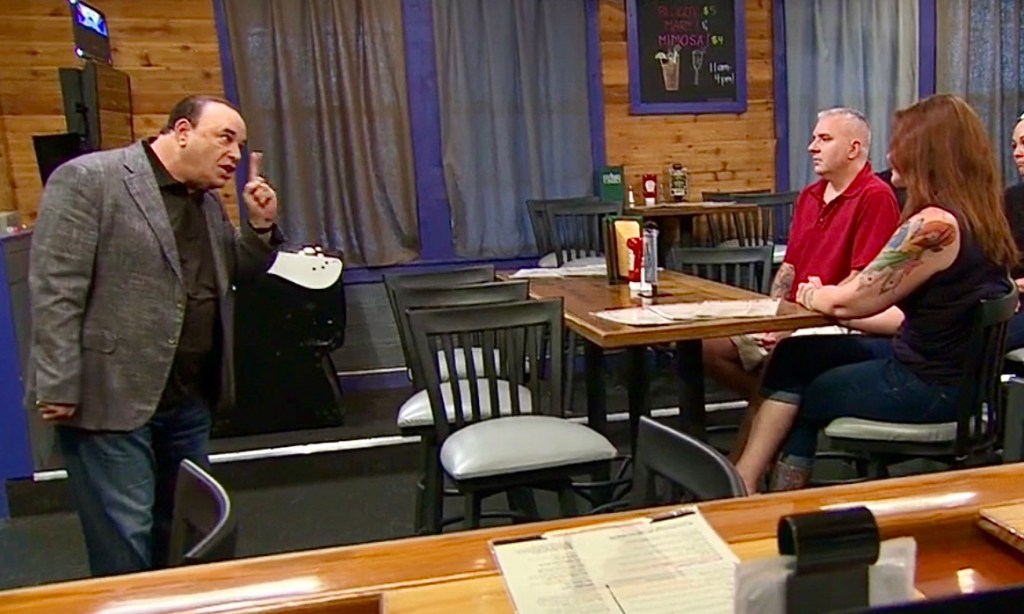
Apologies are very important and can be crucial in the healing process. Unfortunately, I know that firsthand and not just from watching Bar Rescue. Jon has spoken before about the importance of apologies and the need for society to allow room for them to be meaningful. Meaningfulness is often related to the nature of the transgression that sparked the apology in the first place. For example, if I forget my 14th wedding anniversary and get caught a hair’s width away from cheating on my wife, my apology might, if I’m super lucky, open the door to possibly discussing a divorce with her instead of just being served papers and talking through attorneys. However, if I fail to keep sweet vermouth on hand for the rare person who orders a Manhattan, a simple, “Sorry” is likely all that’s needed for forgiveness to occur. Jon addresses this aspect of apologies on an early episode of The Jon Taffer Podcast back in June of 2018 when he reflected on Roseanne Barr’s apology for her horribly racist tweet.
Jon says that while Roseanne’s comments were offensive, her apology was deeply sincere, and he questioned how long society should continue to punish someone who has genuinely apologized and is willing to make amends. He pointed out that actions are choices, whereas words can sometimes be spoken in error or ignorance. Jon’s point of view was not to dismiss the hurt caused but to consider the value of forgiveness and the role it plays in helping people grow and understand their shortcomings, and therefore creating a better society in the long run. This principle resonates with me now as I reflect on Jon’s own choice of words during the interview. If we look at Jon’s entire body of work—the compassion, care, and ethical leadership he has consistently shown—doesn’t it make sense for me to offer him the same grace he believes others deserve, and would, I think, offer me if the shoe was on the other foot? It is, after all, the hospitable and illustrious thing to do, even if it is also the hardest thing to do.
That said, I recognize Jon’s comments on FOX News might have resonated with those who share his beliefs about personal responsibility, the effectiveness of his preferred economic policies, and the way they see powerful people treat workers. While Jon’s analogy was accidental, I can’t ignore that many people believe he meant what he said because they have suffered from being treated like dogs and being told it was for their own benefit by people who hold similar stations and economic views as Jon but see their relationships with their employees as transactional not custodial.
My hope is that by extending Jon grace for his comments, I can model the empathy and understanding that I wish to see in his approach to economic, political, and social issues and that I see him so readily offer to others interpersonally. Plus, I want to have integrity too, and espousing the illustriousness of virtues such as compassion and empathy requires me to act in accordance. I can already hear what Jon would say if my words and actions didn’t align because I hear him say it to the owners and staff on every episode of Bar Rescue.
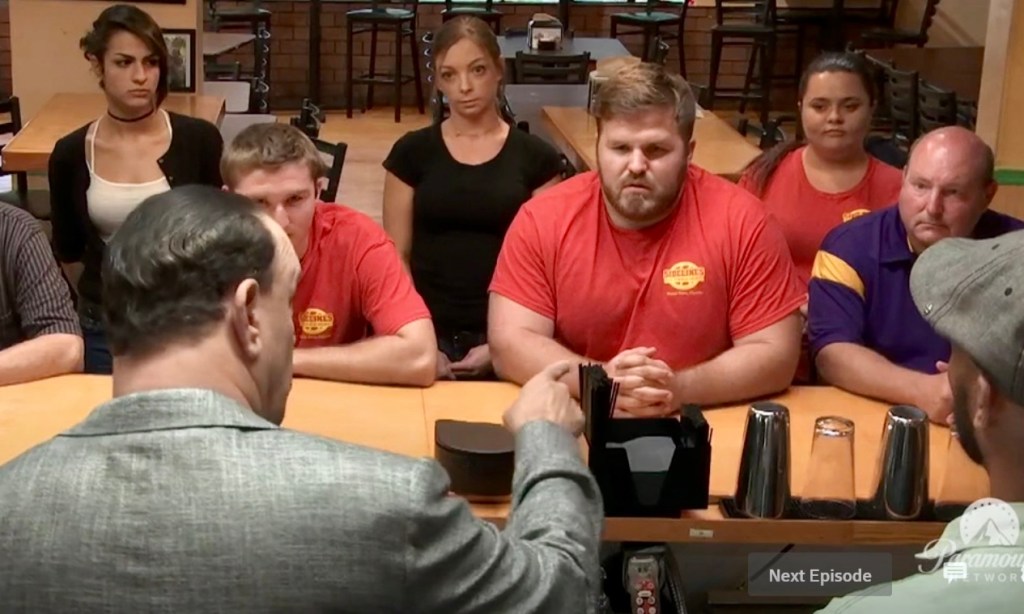
Luckily, Jon provides a very powerful example of how to simultaneously hold someone accountable, disapprove of their behavior, and still provide them a path forward in “S5E23: Daddy Dearest,” when Jon tells Rich Marinacci, “Just because I’m not thrilled with you doesn’t mean I’m not rooting for you.” This approach—that we can hold someone accountable for their actions while still supporting their growth—is something I think is crucial. Similarly, a sincere apology that fully acknowledges the hurt caused doesn’t let someone off the hook; instead, it offers a way forward, a chance to rebuild trust and understanding. It serves to indicate one’s own readiness to be accountable and begin to repair the damage done.
I believe this way of creating a path forward is what Jon strives for in his work and what I want to practice in my own life, but when I reflect on Jon’s comments and the way they made me feel, I find myself grappling with how to reconcile his usual compassion with the harshness of that analogy.
For me—and for lots of people—the analogy was harsh, and the words hit hard, especially coming from someone I admire so much for his compassion, hospitality, and commitment to treating people with dignity. Jon’s work has been a standard of virtue and a meaningful source of inspiration for me, so knowing he said something that seemed to devalue people’s humanity was jarring. It didn’t align with the Jon Taffer I’ve come to know and respect.
During one of my favorite interviews with Jon, his appearance on Lewis Howe’s School of Greatness podcast, Jon says one of his three truths about life is to “live a life of morality.” He goes on to explain what he means through examples, and it seems to me that what he’s talking about is being hospitable, and what I mean by hospitable is the ethical practice of welcoming and generously accommodating others, embodying a spirit of openness, inclusivity, and benevolence.
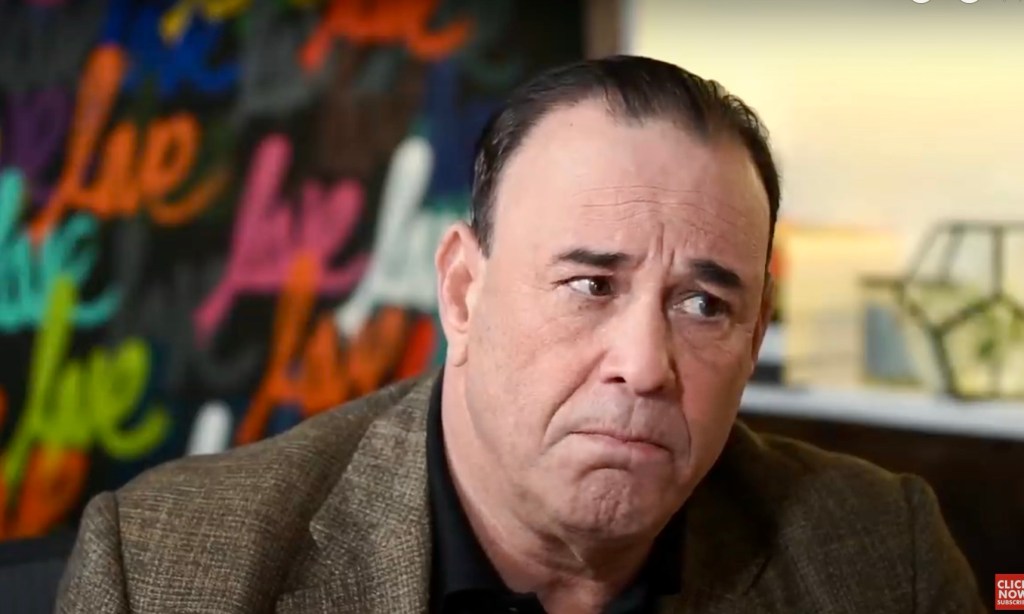
Defined this way, hospitality is moral because it is an essential virtue that transcends common courtesy and reflects a deep commitment to recognizing the dignity and worth of every individual. It involves creating a space where others feel valued and respected, promoting a sense of belonging and community. Hospitality challenges the boundaries between self and other and invites a deeper understanding and appreciation of diverse perspectives and experiences.
At its core, being hospitable, in the sense that I think Jon means when he talks about living a life of morality, is an expression of empathy and a manifestation of the ethical duty to know, care for, and support one another within the framework of a shared human existence. He talks about all of this in relation to the function of bars in our society on every platform he has. Jon doesn’t just work in the hospitality industry. He lives and breathes hospitality. Hell, I’d go as far as to say hospitality resides within him.
It’s a beautiful thing to see, too. Episode after episode of Bar Rescue and Marriage Rescue, Jon is there for people, freely giving them his time, energy, and checkbook to help improve their lives. I’ve not only written about Jon’s illustriousness extensively throughout this blog but also created this blog solely for the purpose of celebrating these amazing attributes in him.

As Jon tells us, episode after episode of Bar Rescue, it’s not about fixing the bars, it’s about helping the people. You can clearly see this in the natural disaster episodes, and it’s there, too, in the episodes with alcoholic or grief-stricken owners for whom Jon gets professional help. It’s there when Jon invests hundreds of thousands of dollars in failing establishments, pretty much knowing they are going to fail but providing an opportunity for the owners to recoup some of their losses when they sell a completely remodeled and profitable business instead of the shithole they had four months prior. It’s there with people who are hopeless, stuck, ignorant, arrogant, uninspired, angry, disrespectful, vulgar, lecherous, predatory, unscrupulous, violent, and even, as we find out long after Jon rescues their bars, murderous. Jon offers every single one of them his best because they are counting on him, and he lives a moral life, hospitable to everyone who crosses his path.
Jon talks about the importance of offering human dignity and respect to everyone in another one of my favorite interviews, this one with Andrew Keen on Lit Hub. Treating people with dignity and respect is the crux of Jon’s book on conflict and is the only way you can really have transformational conflict with others. Jon laments about our current political climate and really sees engaging, thoughtful, curious, face-to-face interaction among folks from different walks of life as essential to healing divisiveness, creating mutual understanding, and building communities where people truly take care of one another.
Thinking about these things left me wrestling with how to reconcile Jon’s comparison of industry employees to military dogs with the compassion and empathy he so often displays in his work; the juxtaposition was so mindboggling to me, I just parked the whole incident way in the back of my mental parking lot and left it there for years, inching along the path of reckoning with it every time I remembered it was there, which was often because, you know, I’m kind of a fan of his.
I wondered, how could the same man who teaches us about empathy, compassion, and personal responsibility say something so seemingly at odds with those values? How could the man whose mantra is “There are no failing businesses, only failing owners” blame an industry of failing businesses on the employees who had served that industry and who he wanted to come back to work? How could he be so attuned to other people’s emotions that he wrote a book about how to manage them, and yet be relatively dismissive of the pain he stimulated in his audience that day? How could the Jon who advocates for respectful, engaging discourse and face-to-face interaction in bars—where people from all walks of life can connect and break down barriers—make such a degrading comparison?
I no longer felt welcome at Jon’s table, and that hurt me very deeply, especially because my desire to live hospitably requires me to be connected to every human being on a fundamental level. Jon’s work has been a source of inspiration and a powerful example of how to act ethically and with care for others, so feeling disconnected from him was particularly painful. What made it even worse is that Jon isn’t just “any” other person to me; he’s someone I’ve looked to and championed as a role model for compassion, integrity, inspiration, business advice, etc. Being disconnected from him at such a basic human level was unfathomable, especially if the reason was a one-off one like everything seemed to indicate, including Jon’s apology.
To confound matters, I also think this whole situation probably hurt Jon, too. I mean, how could it not? Even by unintentionally stepping away from the empathy and care that he so often provides, Jon effectively alienated himself from a large segment of the population—even some of his fans. And knowing how deeply he values people and their success, it surely must have hurt him to know he hurt the very people he strives to support and who support him, and believing that also made me sad.
No wonder I kept this situation way in the back of the parking lot for so long.
Seeing Jon get dragged through the mud was disturbing, too. It still is. I’ve spent countless hours writing about his virtues, his incredible impact on the lives of those he helps, his unwavering commitment to people’s businesses, and how he can serve as a role model for many of us. But heroes, as Peter H. Gibbon reminds us in A Call to Heroism, are made of flesh and blood. They are not perfect. We seek out their greatness, but we should not be surprised by their flaws.
Jon’s comment was an accidental statement to him, but at the moment, to me it was where his principles seemed to waver, and it left me disillusioned and disconnected from him at a very basic human level. What would it have been like if Jon’s apology had gone further—if he had openly recognized the emotional impact of his words on those of us who heard them? Could that have mended the disconnection and brought more healing? I understand that in the heat of the moment, words can come out wrong; his apology reflected that, and I believe his explanation. Still, although well-intentioned, Jon didn’t fully acknowledge the hurt his analogy caused people like me, and I saw that as meaning our hurt didn’t matter to him.
I know Jon carries the weight of an entire industry and everyone who works in small business on his shoulders. The pandemic was an unprecedented crisis, and it was clear from that interview that Jon was grappling with its severe impact on his beloved home city, the broader hospitality industry, and all of small business, which makes up just about half of all jobs in America. I’ve been following Jon for a long time, and I’m pretty sure his gears were—and still are—in overdrive trying to think of any way possible to rescue the hospitality industry.
I wonder, what might have happened if Jon had just said, “I want to apologize for the comment I made yesterday because I know I hurt people by likening them to dogs and saying we should make them hungry to go back to work. I didn’t intend my message to come out like that, but it did, and I’m sorry, especially to those who work in the hospitality industry and whom I want to champion. I know I didn’t do right by you.” How would those words have resonated with the people who were affected? Could that level of acknowledgment have bridged the gap and mended some of the vitriol toward Jon that still lingers today? How powerful of an example would that have been for people everywhere to own up and acknowledge when and how they hurt someone? Jon putting himself at the mercy of others would have shown a level of humility we rarely see from rich, powerful, and authoritative people and demonstrated how vulnerability can be just as powerful as dominance.
I wonder, what if, instead of the analogy he used, Jon had said, “How can we, as an industry, come together to solve this problem? How can we ensure that everyone—employers, employees, and customers alike—are being supported to make it through this crisis?” Jon is a leader, a marshal-the-troops kind of guy. He is solution-oriented, team-centric, creative, amazingly connected, and wealthy. He could easily—or at least more easily than most—bring together all the stakeholders in the hospitality industry to develop sustainable solutions that work for everyone.
I wonder, what might have been different if he had approached this issue with the same empathy, care, and concern for community he so often brings to Bar Rescue? Could that have sparked a joint venture that transcended individual opportunities and created something truly transformational for the entire industry? Imagine a Bar & Restaurant Expo that wasn’t an expo at all, but an industry summit specifically designed by Jon to bring people together to solve some of the biggest challenges they are facing? I think then we would have seen the Jon I know and love, not evil Jon from the Mirror Universe.
I wonder, could I be writing about the phenomenal example Jon set in a time of crisis as leader of the whole hospitality industry, customers and all, rather than having to revisit this painful incident and do the emotional labor of forgiveness?
I admire Jon deeply. I believe in his ability to be that leader and rise above this situation, doing something different tomorrow than he did today. I’ve seen him do it successfully for years. Honestly, though, Jon doesn’t have to do anything at all to receive my forgiveness, and not because I am quixotic and think Jon is so great he’s above reproach or because I want to let him off the hook but because I, too, am a principled and virtuous person, willing to roll my sleeves up and get into the trenches when something matters to me. And as a person who admires Jon, I must admit, he matters to me.
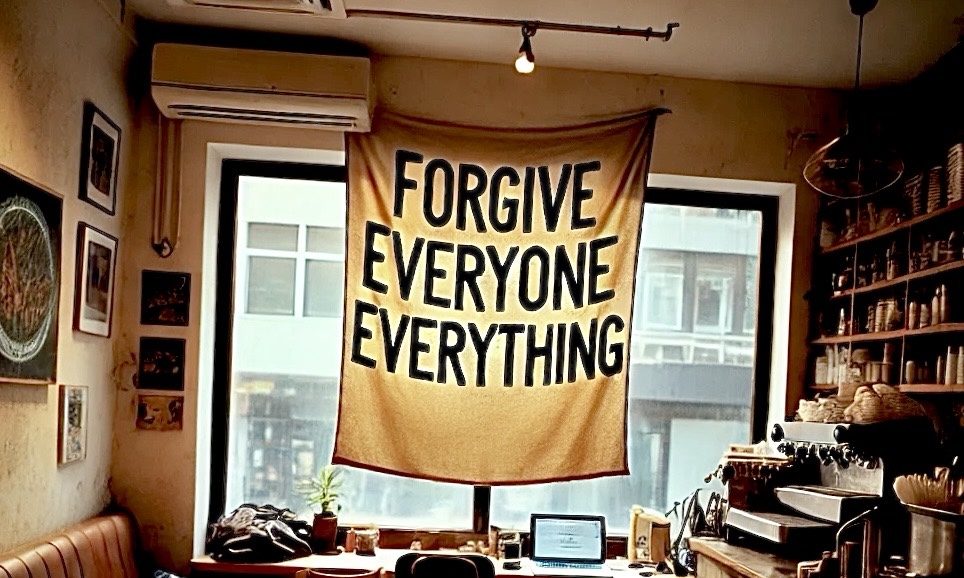
I once saw a sign in a coffee shop I frequented that read, “Forgive everyone everything.” I took a picture of it because it spoke to my soul, and it perplexed me. Is forgiving everyone everything even possible? I still think about this sign because I made it a credo I live my life by. Offering my forgiveness is my choice, and I do it for myself because I believe in the transformative power of love and compassion. For me, forgiveness isn’t just a moral duty; it’s an expression of the hospitality I strive to live by—welcoming others with grace, even when it’s difficult. To forgive is to create space for healing and connection, to open doors instead of closing them. It’s not about excusing the hurt but about choosing to move forward with empathy and understanding. Jon’s words may have caused pain, but they don’t erase the good he’s done or the impact he’s had on my life. So, I forgive, for me, for him, and for the sake of love and the belief that compassion can create a better world.
In this process of forgiving, I’ve come to realize that forgiveness is not just about the other person—it’s also about clearing my own head and heart. I think I’ve done that with a nice long drive through Jon’s illustriousness and my own capacity for grace and resilience. As my Elvis impersonator, college classmate once said in his speech, “When you love someone, you love all of them—the good, the bad, and the ugly.” He wasn’t talking about ignoring their flaws. He was talking about acknowledging them and choosing to see the whole person.
In the end, this isn’t about holding Jon to an impossible standard. It’s about holding myself to one. Can I put my virtues into practice? Can I reconcile my own feelings and can I let go of the residual pain and disappointment I’ve felt to embrace the full picture of a man who has given so much to so many, including me?
The answer is yes. It took a lot of work, though, this three-year journey down the long and winding road of processing my feelings, understanding Jon’s perspective, offering empathy, and finally, allowing forgiveness to flourish from a place of joy and not just moral duty. It was a difficult but beautiful labor of love, and I appreciate you coming along for the ride.
As I bring this post to a close, I find that I no longer need to return to my mental parking lot for this issue. So, instead of circling back, let’s keep moving forward, out onto the open road, where new challenges and opportunities await. If you are up for it, I know a recently remodeled bar in Texas we can visit.

 In Good Spirits
One response to “After Hours: A Labor of Love”
[…] best, change direction if what you are doing isn’t working, or seek help to learn a better wayhttps://ingoodspiritsjontafferfan.com/2024/09/01/after-hours-a-labor-of-love-2/. It’s tied to integrity because one’s words and actions should be aligned, and living by your […]
LikeLike