
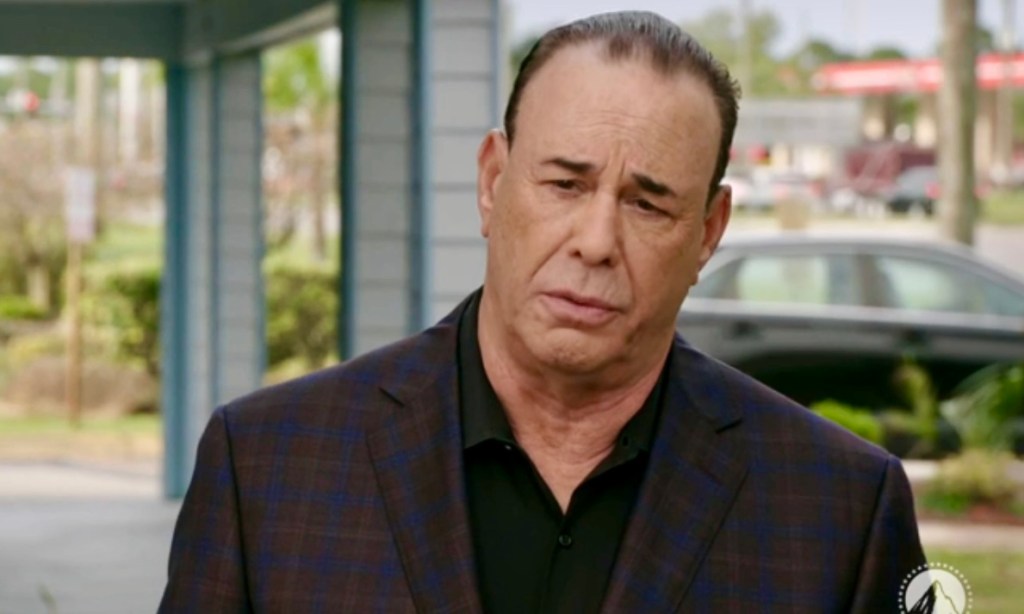
In my most favorite episode of Bar Rescue ever, Jon is giving off more “Season One Jon Taffer” vibes than I’ve seen in a long, long time, and I’m loving it. Jon is at Cielo Restaurant and Lounge, an establishment in Port St. Lucie, Florida, where owners and good friends Mark Maffei and Os Ou are drowning in debt and denial. The stakes are high—both men are on the brink of losing their homes—and the bar’s operations are a disorganized and incomplete mess—you know, with no standards or training and very little understanding of what standards and training should even be in place. The bar’s name, Cielo, means “heaven” in Spanish and Italian, yet it is anything but divine in its current operational state.
The episode kicks off with a producer asking Mark and Os, “Would you do this again?” There’s a long, painful pause, and I could feel the weight of their answer even before they spoke. Os looks sad, his eyes a bit teary, while Mark appears uncomfortable. Neither of them wants to say it, but finally, Mark ends the silence with a heartbreaking, “As of right now, no.” You can feel the defeat in his voice. But it’s Os who delivers the real gut punch. His humility makes it even harder to hear when he says, “Cielo is where my dreams live. Cielo means everything to me.” He’s one of the first owners I’ve believed.
Shortly after discovering Mark and Os’ situation, Jon is monitoring the happenings with the experts during recon, giving their assessment of the situation, which, of course, is terrible. Jon notes the unreadable signage, the vague concept, and the glaring fact that no one knows what they are doing. Local radio personalities Virginia and Fran are sent in to experience the bar firsthand, and that reveals an issue terrible enough for Jon to have to intervene. What they find is disappointing and dangerous: over-sweetened drinks, swampy mojitos that they refer to as “a salad in a cup” because of the amount of muddled mint being sucked up through the straw, raw chicken contamination throughout the kitchen and old, inedible food that would send anyone running for the hills—or their toilets, or maybe even the hospital.
Jon is livid, especially when he sees the cook cross-contaminating the entire kitchen and then serving calamari dated from the year before. The calamari is yellow, and Brad Miller, Jon’s chef, says he hopes that it’s from a marinade, but it’s clear no one actually believes that’s the case.
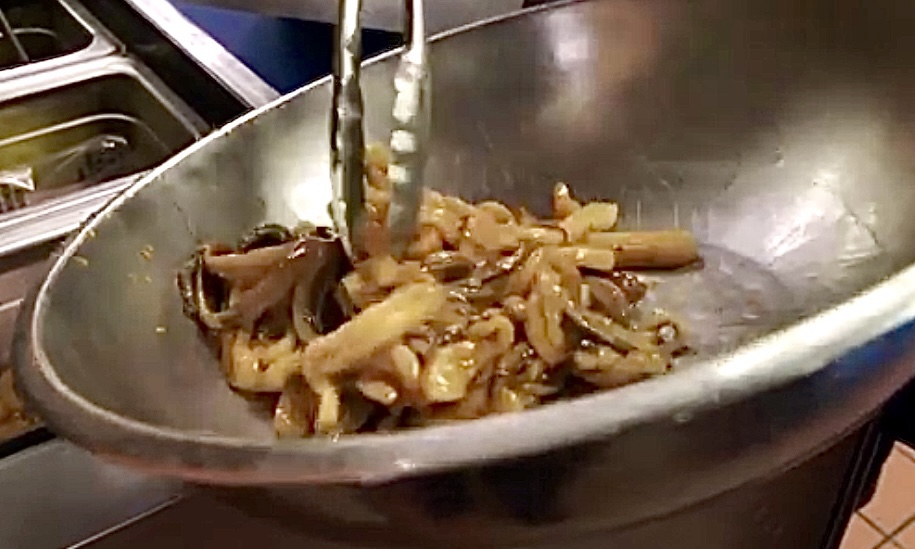
In order to prevent his recon people from eating the calamari, Jon heads in like he’s done one hundred times before to make sure “Nobody eats this frickin’ food!” (IYKYK). He picks up owner Mark and beelines to the kitchen to prevent the calamari from going out to the customers and then has Chef Brad smell it to see if it’s good. He says it smells fishy, so Jon smells the calamari, afterwards passing it to Mark to smell. I had to look away so I didn’t vomit thinking about it.
Mark can’t tell if the calamari is good or not, and Jon tells him, “That means you don’t have a fucking clue. That’s what that means.”
Jon talks about the chicken cross-contamination with Joel and then goes down the rabbit hole of offenses he saw in 90 minutes or less of observation. Jon tells Joel, “I watched you before with chicken wings, take them to a dishwash area, not a prep area. You’ve got chicken wing juice all over your hands. You open the doorknob, took a box to the garbage. You have raw chicken juice all over that door. You then grab the handle here. This entire kitchen is covered in raw chicken, right?”
Joel’s no dummy. He quickly and immediately says, “Yes, sir.”
Jon turns to Mark and Os, “But this is your place. Look at this stuff in the freezer, unwrapped. Look at these, guys. You want to eat those? Look at the freezer burn on them. This is your money. And now, just like that money, it’s in the trash.” He throws it in the trash.
“And when do you think this is from? You don’t fucking know, do you, Mark? No, you don’t know that either. I want to understand, what do you know? You got a guy back here who’s cross contaminating your kitchen.” He turns to Os, “You’re vaping, which is against the law, in a frickin’ kitchen, oblivious to everything.” Then Jon goes back to Mark, “And you are supposed to be experienced, and this is your kitchen. You’re gonna fucking kill somebody.”
Lord, I’ve missed Jon, especially because Mark isn’t feeling Jon’s criticisms. Jon apparently understands—in a way I surely didn’t—that the real issue here isn’t just poor management, but a profound ignorance on the part of the owners and a lack of initiative to do anything but accept failure. As Jon points out, Mark and Os aren’t just making mistakes, they are choosing to remain ignorant. Jon’s anger isn’t just about the unsanitary conditions or the poorly made drinks. It’s about the fact that these two men, with everything on the line, haven’t taken the time to truly learn their business. Jon drills into them the harsh reality that they have chosen to remain ignorant, and “in the world of ignorance, you lose money.”
If the bar ownership theme in this episode is how being ignorant and unaware when you open a business can bankrupt you, then the Jon-is-illustrious theme in this episode is how being ignorant and unaware when you explain yourself to Jon can break you. Jon’s illustriousness comes in the form of his being a grandmaster of conversational chess, no chair throwing or crazy bursts of anger needed. Just Jon, orchestrating verbal checkmates that leave no room for delusion and are very reminiscent of Jon in Season One, only without the sparkle of an exciting new adventure in his eyes.
Jon is aware that Mark and Os have been coasting downhill on a fantasy, believing they can run a bar without knowing the basics. His verbal smackdown about the kitchen is the strategic beginning of Jon’s dismantling of the delusional logic that has them believing they have any type of competence, especially for Mark, who thinks he is working hard because he took out a home equity loan on his house to keep Cielo running and is about to lose it all.
Os always looks like a deer caught in the headlights, so I’m sure he knows he doesn’t know anything. Mark, though, fights with Jon because he thinks he knows things he doesn’t and defiantly says stuff like this to the camera: “A lot of things that we thought were okay obviously aren’t. I didn’t expect him to come in here and be nice, but he made it out like I was a dumbass…didn’t know nothing. It’s fucking bullshit. I’ve been running restaurants for five, six years. I know a little bit. Cause I’m not fucking ignorant. I know that.”
The next day, Jon sets the scene for the upcoming staff meeting, telling us what his end goal is and why. He says, “Last night was incredibly frustrating to me. Both of them, Mark and Os, have owned this business for three years. Neither of them take any accountability, any responsibility. If I don’t get them to own it, their business is gonna run them rather than them running their business. And it’ll run them right to the poorhouse.”
At the beginning of the staff meeting, Jon begins his conversational chess game with an opening gambit so subtle, you’d think this wasn’t a chess game at all, but a regular conversation. He asks questions in a normal, concerned voice. Jon starts with Joel the cook and touches on his pride with the fact that he stayed there till 6 a.m. cleaning. I feel confident enough in my knowledge of Jon to say that impressed him. Jon talks about how Joel wants to do a good job, you know, so proud of his food, made his own recipes to fit the market, etc., but he’s got no help, no management, no training, no support at all. “How terrible is that?” Jon asks without saying anything, because his concerned tone says it for him, and it lures me into Jon’s web of kindness and support.
Then Jon does the same thing to Os, seeming to apologize for being harsh on him the night before, and then asking with concern about his job. “So, do you understand why I let you have it last night? It’s not easy to beat up somebody in his own business in front of his employees. But the fact of the matter is you’ve been in this business how long? Two years? You put your life savings in it. And what are you supposed to do when you come here every day? What’s your job here?”
Os tells Jon it’s to book entertainment and do promotions. He has his dance class and comedy nights. Jon says that in his experience neither one of these “promotions” is very good because dancers drink water and Diet Coke, and comedy clubs have to require a two-drink minimum to be profitable. The staff agrees with Jon, so then Jon gently reprimands Os, who still looks like a deer in the headlights, for not doing something different when his promotions weren’t working, “So are these the same promotions we’re doing now that we did three months ago?” They are. “When you do a promotion and three, four months into it, it’s not working, shouldn’t you come up with a new one?” Jon has a point, as usual, but this time it comes in the form of a cherry-flavored liquid-filled syringe not a bitter pill that the owners have to swallow without water.
Os offers his excuse, “There’s just so much. Both of us are constantly feeling like we’re underwater.”
Jon compassionately rebukes him. “Because you don’t know what you’re doing. If you knew what you’re doing, it’s a pretty calm process. It is. And people aren’t stressed out like you are.” Jon sounds so sincere and concerned that my heart is warm and fuzzy, and I’m thinking that, for once, the owners really are just good guys in a bad place. I’m so lured into this new way of Jon’s that I’m also seriously thinking how nice it is of Jon to be giving them advice like this. He’s going to fix it, and they won’t be so stressed out when they know what they’re doing. I truly think that’s awesome because I was part of a start-up operation once, and words like “chaos” and “wreak havoc” and “too stressed to sleep” come to mind.
Watch for yourself in the segment below and see how concerned and curious Jon is about the workings of Cielo’s management.
Although I’m noticing the oddity of it, I’m enamored with Jon’s new approach and my guard is down. Jon asks, “What is your job when you come here every day, Mark?” Ah, so now it’s Mark’s turn to be asked questions.
Mark tells him, “I pretty much run all the aspects of the restaurant. I mean, there’s just a million things going on at once.”
Jon continues with his concern for them and their ignorance. “We don’t know what we’re doing, do we?”
Awww. Isn’t Jon being sweet?
“For example, Partender is an inventory tracking application. So we know what we consumed, and we know what we sold.” Jon’s segue into this is smooth and has that same concerned tone, but my mind wakes up at this point, and I become more attentive to what Jon is saying because he is usually much more urgent about the Partender results. The thought that maybe the results were good actually crossed my mind, so I’m get the feeling something is going on, and I want to be fully attuned to it.
As I write this, though, I’m rolling my eyes and shaking my head at myself for being lured into such a stupor of naivete by Jon’s “kindness,” Because I know what happens next, I asked AI to create a companion image for me to include here about what has been happening so far, and this is what I got:

I don’t know whether to laugh or cry, but one thing is for sure: I’ll never see Jon the same way again. Ever.
Okay, back to the show where Jon is whipping out the Partender results. “This is your management, Mark. Over those several days, we poured $8,900 worth of alcohol at retail value. We sold $6,400 worth. The gap is $2,500 in one weekend. How much is it a year, Mark?” Jon’s intensity is increasing, and I can tell he’s getting geared up to go for Mark.
Mark: A hundred and thirty thousand.
Jon ratchets up to emphasize the extent of Mark’s ineptitude, “A hundred and thirty thousand dollars a year. All of this is being overpoured, given away or not rung up, as you’re standing here running this place. You’re not losing money, you’re giving it away.”
Then there’s some discussion about how that’s possible, and Jon very pointedly tells Mark it happened right in front of him, then turns to Os and says, “That’s your partner. He managed nothing.”
There it is. Jon is going to go for the jugular and point out everything Mark has not done.
Mark fights back, which is great for viewers because it gets Jon going. “Believe me, I do a lot,” he tells Jon in a defiant, snotty way, and I get excited for the showdown that’s coming because Jon’s goal is to get everyone to take responsibility, and scrappy Mark is the only one left. Joel and Os have already acquiesced, easily, because Joel is eager for someone to teach him something helpful, and Os is as pliable as putty. But Mark? Mark is feisty, defensive, and eager to prove he cares and is competent. This is going to be fun to watch.
In his exasperated and very impassioned “Don’t bullshit me” voice, Jon tells Mark, “It’s easy, man. Check the food. Check the drinks. Train people. You bet it’s easy.”
Mark fights a little more. “It’s when there’s 200 people running around in here, I can’t check every drink they’re making.”
“Your attitude sucks. You stand here saying, ‘Well, I didn’t learn. I didn’t this. I shouldn’t be in this business. Maybe I shouldn’t do it.’ Not once…”
I’m excited because Jon is getting agitated and he thrives in these situations, which is when Bar Rescue is the most fun for me. What’s even better, though, is that Mark cuts Jon off and then says something I don’t remember anyone ever saying before and which basically throws Jon’s words back in his face. Mark says, “You wanted honesty from me, so I’m giving you honesty.” Wow! I’m impressed, although I think Mark just stumbled into this tactic.
If you are wondering why I’m impressed, here’s why: Jon tells everyone all the time in staff meetings to be honest with him, because if they aren’t honest, he won’t be able to help them. The employees trust Jon and yearn for the business to be better, so much so that they offer their perspective to Jon, even when they know it’s likely to get them ostracized or fired. Jon usually accepts other people’s perspectives if they are employees or if they align with his take about what’s going on at the bar. He bats them down, though, if he deems they are excuses because an excuse is essentially a lie, and Jon hates lies. Mark offers an excuse, but he justifies it by reminding Jon that Jon wanted honesty. Mark is telling Jon, “Im playing by your rules and giving you honesty; it’s not my problem if you don’t like it or believe it.” Well played, Mark.
I’ve never seen anyone successfully do this to Jon, so I’m sitting upright and fully attentive. I also haven’t heard this kind of back and forth in a while and it’s exhilarating. Mark’s passion is nonverbally understated, so I missed just how defiant he was going to be. To add insult to injury, I’d almost forgotten how good of a master Jon is at conversational chess, too. The real highlight of this episode is about to come.
I’m wondering what Jon’s move is going to be. Mind you, I have slowed this conversation down to a microscopic pace to write about it. In real time, Jon and Mark are going at it heatedly, and I’m telling you what they are each saying and also what I am thinking, which is all happening simultaneously in about half a second. As I’m considering Jon’s different options, Jon responds, so effortlessly, with, “I understand that. So why are you here?”
WTF?
Jon just bats it away like one of those fruit flies at a bar he rescued and takes another direction with a new question. Here it was, a new tactic from the owner that I thought was going to stump Jon for a second, but nope. It’s nothing more than an extra eight words for him.
Still, it’s worth noting that I might have heard Jon say something similar to “I understand” when someone told him they may not be able to give him what he wanted twice. Once when he was talking with his construction people about some crazy shit he wanted done that they were explaining might not be feasible in the time frame he gave them. Then there might have been one other time when he was in Puerto Rico talking to the VP at Home Depot who told Jon a materials shortage might limit his ability to get Jon what he needed.
I am not at all familiar with Jon using this “accepting” language for anything involving owners. Perhaps, Jon’s really working hard to soften and shed his image as a yeller? He is communicating differently this season, for sure, by hedging, acknowledging, warning, appearing to be influenced a little by the owners—not in his message about how awful they are being but with changes in his tone and with phrases like, “You’re not gonna like this part” or “It’s not easy to beat up a person in front of their employees” or “I understand that.”
My thoughts about this situation are interrupted by the next phase of Mark’s come-to-Jesus talk. Jon has asked Mark, “So why are you here?” and Mark replies, “For them. That’s why I’m doing everything,” referring, of course, to his employees.
I know immediately that Mark has made a fatal mistake. Jon has dismantled this claim two hundred times before, and it always signals the beginning of the end. I know exactly where he is headed, and Mark should just state his resignation right now. In Jon’s mind, owner failure always equates to lack of concern for employees, and Jon has already shown Mark’s “successes” have also failed the business. It’s very simple, Jon is leading Mark into a double bind, and he says exactly what I expect him to say to refute Mark’s assertion he’s doing everything because he cares about his employees, “Bullshit. How much more money do you have till we’re closed?”
Mark replies, “Three months, and we’re out of here.”
Jon reiterates, “Three months.” Then he looks at the bartenders, “So you lose your job in three months. Did he come through for you? He says he’s done everything, but he doesn’t change. If he cared about you and this place and you keeping your job, he’d run it, wouldn’t he?”
Mark is in a deep hole now, but I gotta give the guy some credit; he’s still fighting. “Nobody here is going to question whether I care about them or not. I didn’t manage it effectively, but I care about everybody. It’s not bullshit.”
Oooh, Mark says he didn’t manage it effectively. I think Jon will run with Mark’s admission of failure, but the conversation is going pretty speedily, and Jon lets it slide, probably because he could do this in his sleep and he kind of looks halfway there. It doesn’t make much difference that Jon let it slide, though, because Mark is angry now, and angry people say stupid things. Jon knows this. I read it in his conflict book.
Fighting Jon is hard work, not just because he’s a master at conflict but also because he’s got no skin in this game since he’s there to help Mark. Plus Jon has the truth (aka Partender) on his side, so he’s just running pure offense for its own sake.
Mark is in big, big trouble as far as this argument goes. “Bullshit,” Jon repeats to Mark.
Mark: “You can call it bullshit, but I’m here.” That’s another ineffective claim owners make and that Jon can dismantle while he naps with his eyes open.
Jon: “And you do nothing to save her job.”
Mark: “I know what effort I put into this place every day. Maybe I don’t have enough knowledge.”
Jon: “You come here every day, but you don’t do the things that you don’t like doing. Like checking the kitchen, checking the bar. You’re full of shit, Mark. For three years, you didn’t put in the effort to learn a frickin’ thing.” Jon is pointing out that Mark doesn’t just “happen” to be ignorant; he chose to be and to stay ignorant.
Mark: “Yeah, I sure did. I don’t know about the kitchen. I’m not a Chef. I’m not a cook. I never had a desire to be. I learned a lot about just running our restaurant in the last few years.”
Jon asks, “Do you know how to run a bar? Do you know how to make a drink?”
Mark, still defiant, replies, “Yeah, I got my certificate up there, just like Mario.” This was a bad, bad move. Mark is trapped—damned if he says he has the skills and damned if he says he doesn’t. This is exactly where Jon wants him.
Jon pushes further: “So why did you lose $130,000 a year?”
Mark, finally says, “Not checking enough. That’s why.”
There it is—what Jon was waiting for: Mark openly admitting his failure and putting himself in a double bind.
Jon is so task oriented, once an owner has their “accountability reckoning,” Jon verifies it and then automatically moves to the next order of business, which is implementing solutions through training. He paraphrases back to Mark, “Okay, so now we’re getting somewhere. So you come to work, but you don’t check. You come to work, but you don’t taste. You come to work, you don’t train, but you’re telling me that you’re trying, Mark, you’re full of shit and you’re bullshitting yourself. And until you own this failure, you’ll never be successful.”
Mark acknowledges his role in the situation with, “Of course, the buck stops with me.”
Jon now leads Mark into the solution for his ignorance, “So what are you gonna do?”
Mark: “I’m gonna make it work. I’m gonna learn it.”
Jon: “Okay. Cause I’d like to stop screaming at you, and I’d like to start learning.”
You can watch a good chunk of this conversation in the video below and see Jon work Mark into the double bind of being a failure for doing something or being a failure for not doing something. One beautiful conversation, and Jon has them all taking responsibility, just like he wanted. This strategic approach is what sets Jon apart. He’s a conversational tactician, and when he steers Mark to where he wants him to be, Mark has no choice but to confront the painful reality that Cielo’s failure is his fault because he accepted it. He says so himself, but only because Jon backed him into a corner so tight the only way out was labeled, “Own Your Failure.”
After this wonderful bit, we learn a new cocktail recipe and a much, much better recipe for calamari. Then it’s stress test time. It is, as expected, a disaster. The bartenders are slow, the kitchen is chaotic, and the food takes forever to come out. Jon says that Mario really is the slowest bartender he’s ever seen. It gets so bad, Jon shuts it down.
Jon also takes advantage of the situation to make sure Mark and Os own their failure. He makes them stand in front of their customers and apologize. They do. Jon doesn’t like their apology, though, so he gives one to the customers on their behalf, “What he’s trying to say is management blew it. They didn’t train their employees. They didn’t set the place up. They didn’t manage it correctly. As an end result, the kitchen is a disaster. They can’t put out food in under 45 minutes. Half of your drinks took 20 minutes to get to you guys. Nothing happened when it should have, the way it should have, and that’s on management. So apologize, for Christ’s sakes. They came here, and you let them down. Own it. Say, I’m sorry.”
Jon was now pummeling them, making sure they knew how much they needed to change. And change, they did. By the end of the episode, not only is the bar improved, so are Mark and Os and their friendship. They are no longer ignorant about running their bar. Os, in particular, is grateful for his training. He states, “Before, I was flying with my eyes closed. I wanted to help more, but without the experience, I just didn’t know how. Now I’m empowered. I feel like I have a voice now.”
The new concept, Don Marcos, is a nod to the owners’ renewed partnership by combining their names Marc-Os. The bar is sleek, the staff is trained, and there’s a sense of hope in the air. Jon thinks this one is going to make it, and as he leaves, there’s a sense of optimism, not just for the bar but for Mark and Os’ friendship, which has been tested but ultimately strengthened by this whole experience.
I’ve also gained some optimism that upcoming episodes will be exciting in the same way they were in Season One, when Jon’s strategic brilliance shone brightly and the only machete he needed to cut through bullshit was his truth. This episode was a fantastic reminder of how utterly different Bar Rescue is from any other show because of Jon, and I want to see more. When Jon uses both his tough love and his empathy, his ability as a conversational chess master is on full display, and I am hopeful to see it again, one calculated and illustrious move at a time.

 In Good Spirits