
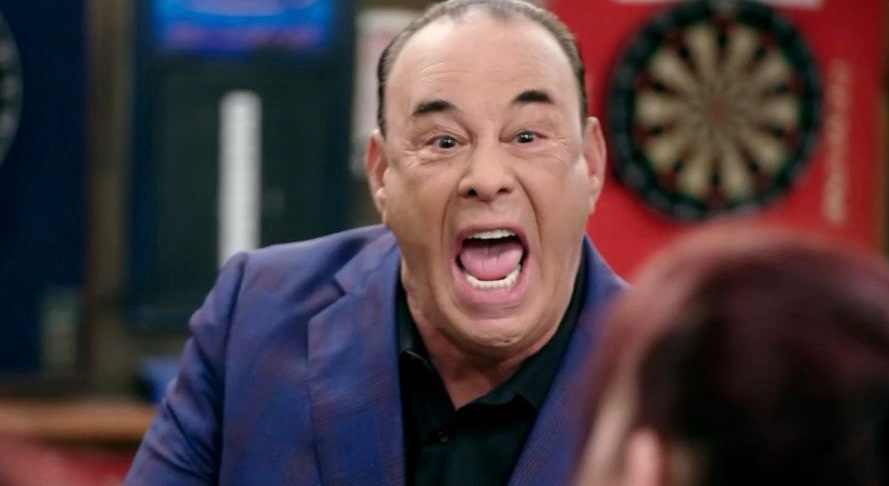
Yeah, yeah. I get this a lot. Thank you for asking and giving me the opportunity to provide an answer. I’m excited to share a different perspective on what’s happening during Bar Rescue that might surprise you. Grab your favorite cocktail – you’re about to see Jon in a whole new light (unless you’re a regular reader of this blog or a fan of Jon’s outside of Bar Rescue).
The crux of my point of view about Jon’s illustriousness stems from my understanding of him and the show, my years of studying human connection and disconnection, and the fact that I’m an excellent listener. The way I see it, Jon sacrifices his identity, or image, or how we see him as a human being for the good of strangers. He tries to mitigate the consequences by explaining his actions, but people often miss or dismiss his explanations, preferring their own takes on his motivations rather than Jon’s. This has resulted in him being thought of as an asshole by a portion of the population, even his fans.
The Crux of Jon’s Illustriousness
“Jon sacrifices his identity for the good of strangers.”
It’s true Jon temporarily does things assholes do to make the failing bar owners want to listen to him and change their behavior as quickly and fully as possible. They often claim they’ve been doing “everything” and are adamant that they care, but Jon knows saying and doing are not the same things, and he’s serious about fixing the discrepancy because people’s lives are on the line. An attentive viewer of Bar Rescue has probably gotten that message from Jon every episode in one way or another, but that’s not the only place you can hear it. Check out this interview with Entrepreneur.
During the first 20 minutes of the show, it becomes clear that the owners think they are “good owners,” but the business, their finances, the staff’s opportunities, the quality of the establishment’s food, service, beverages, and sanitation have all crumbled around them. Sometimes they’ve lost their houses and marriages, yet they go on every day, letting it happen, maybe even harming somebody with cross-contamination, black mold, or some other disgusting thing Jon finds in the bar.
The discrepancy between the way the owner sees what they are doing and the reality of what they are doing is what Jon aims to find and fix because, as he tells us on the show and in his book Raising the Bar, he can’t fix the business unless he fixes the owner first. As we often see, the difference between what the owner is saying and what they are doing is usually huge, and it is often unknowingly supported or accepted by the owner’s staff and family, even if they don’t think so.
Jon has four days to fix this mess, something that may have been ongoing for years. He has to not only fix the physical business, but its identity—the identity of the owners, staff, and even customers. He must turn the identity of the bar back into a “good place to go” instead of a “shit hole.”
Jon tells the staff on almost every episode that he is on a timetable and because of that, he doesn’t have time to worry about their feelings. Even on the very first episode aired, “S1E1: Fallen Angels,” he tells the staff that they better get on the Jon Taffer bus or they’ll be run over by it. To accomplish this almost impossible task in only four days, Jon resorts to asshole behaviors, like yelling at the owners and staff, embarrassing them, even humiliating them, and that’s why we think he’s an asshole.
Jon has undeniable swagger, taking on challenges most wouldn’t dare. That boldness can make him seem like an arrogant jerk, especially since people don’t usually warm to those who humiliate others. Yet, a large part of Jon’s audience celebrates his behavior—whether because they’re shocked by the bar conditions he exposes or see it as pure entertainment.
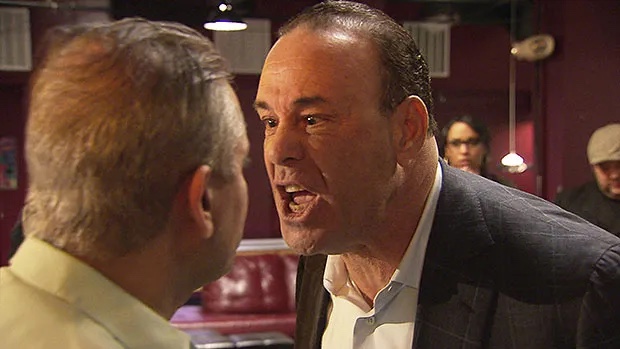
The Psychology Behind the Screaming
To understand why Jon’s approach works, we need to talk about something called “face-work.” Face-work is basically how we manage our public image and help others manage theirs. Usually, we try to make everyone look good and feel comfortable. We avoid embarrassing people. We play nice. Research on different cultures around the world shows that this behavior is actually part of human nature.
But Jon deliberately breaks these social rules, and here’s why: Many bar owners on the show are living in deep denial. As I mentioned before, there’s a discrepancy between what they think is the truth and what is actually happening. Their staff and loved ones often enable this denial because they can never effectively confront the owners. But Jon can. People have called on him and trust his expertise. They welcome his insights, although many of them say at some point in the show, “I thought it was going to be bad, but not this bad.”
Jon’s “aggressive” approach serves a specific purpose: It shatters this comfortable bubble of denial. When he calls out an owner’s failures publicly, he’s not being cruel for entertainment – he’s making it impossible for them and everyone around them to keep pretending everything’s fine. Take for example, “S7E7: Taken for Granted,” where Jon brings DJ Miller’s wife in to humiliate DJ in front of her. Jon brings the truth of what DJ is (or is not) doing into the light for everyone to see so that DJ can no longer deny it.
To fully understand what’s happening on the show, let’s unpack some ideas about identity management and how it works so you can spot it, too. Consider these questions: Can an owner really not see the glaring disconnect between believing they’re a “good business owner” while running their bar into the ground? And can someone really blow through their parents’ entire retirement savings yet still think they’re a “good son”? The answer, it seems, is yes—because Jon asks these kinds of questions in nearly every episode, directly and unapologetically. He demands accountability, but instead, he’s met with excuses. And if there’s one thing Jon hates, it’s excuses.
Erving Goffman, a seminal scholar in sociology and social psychology, studied face-to-face interactions, which are fundamentally different from texting or posting on social media. Many of Goffman’s insights apply to Bar Rescue. Let’s take a look at some.
In face-to-face communication, we share the same space as the other person, forced to “look them in the eyes,” as Jon often says, and speak directly to them. This dynamic is inherently “face-threatening” for both parties. It’s face-threatening to them because what we say could damage their self-image, and it’s face-threatening to us because we’re held immediately accountable for both what we say and how we say it. As a result, we tend to behave better in person than online, where anonymity and lack of consequences let people off the hook.
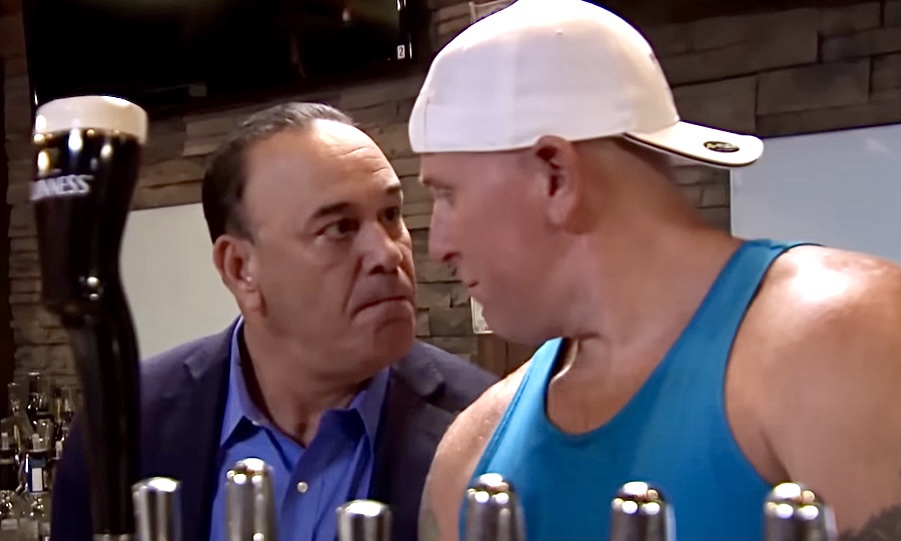
It is important to realize that people don’t like people who threaten other people’s identity as a competent human being. It’s not being a good and kind human. That’s why we have concepts such as politeness and diplomacy and tact. These concepts are about using communication strategies that preserve everyone’s dignity and social standing, even when we are criticizing them and trying to keep them accountable. Jon totally throws all of this social politeness stuff out the window to call it like he sees it.
This kind of behavior is pretty rare, and Goffman called it “going bald on record.” It’s basically calling out uncomfortable truths that everyone else is avoiding. It’s like the opposite of peer pressure. Everyone is buying into a certain truth about a situation, but the person going bald on record stands up to everyone and says, “That’s not true.” It takes a lot of guts to do that and face everyone’s scrutiny for doing it. Seriously, there is a ton of research that shows people will let some pretty awful things go down in the name of social harmony rather than stand up and say it’s wrong. A big part of the reason is because everyone there can hold you accountable for what you are saying and the way you are saying it and ostracize you or, I don’t know, call you an asshole. For most people, they’d rather keep their mouths shut and go along with whatever, than to go against the crowd and lose social standing.
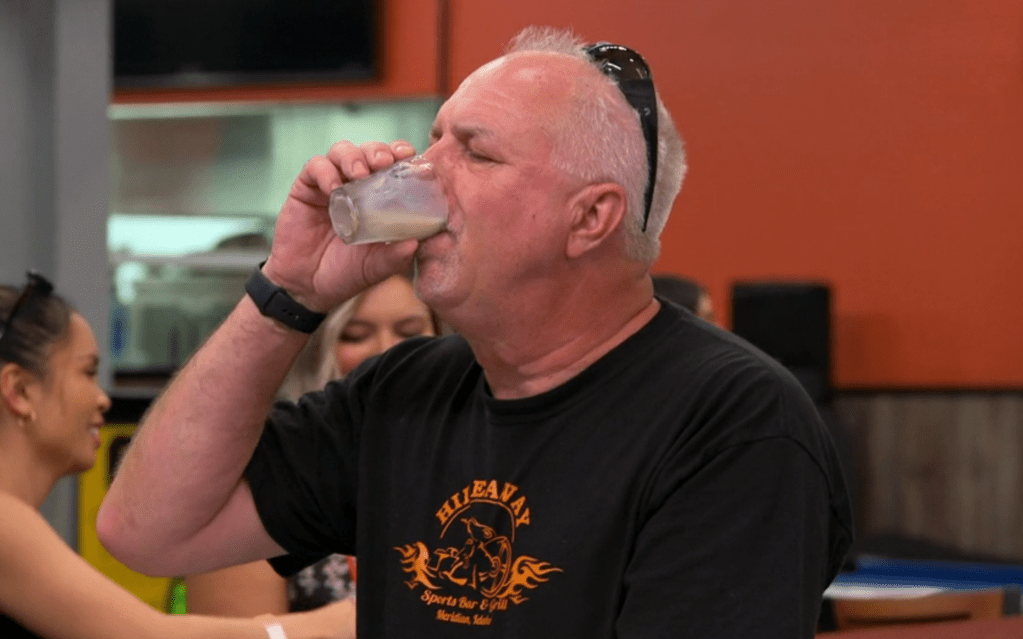
In face-to-face interactions, accountability is unavoidable—people’s responses are immediate and undeniable. Jon takes full advantage of this dynamic by confronting the way owners present themselves as “not that bad.” He goes to town on the owners—and, when necessary, their staff and families—to disrupt the entire system and force accountability. Jon insists they confront the discrepancies in their behavior and the outcomes they’re denying. And he doesn’t leave room for excuses: The only way forward is to admit it’s their fault and acknowledge their failures. It’s reminiscent of 12-step programs, where the first step is to admit there’s a problem. Otherwise, how could Jon fix the problem if the owner won’t even admit there is one? (See, for example, “S8E26: Hideaway from Reality” for an example of what happens when the owner won’t face the truth.)
But accountability isn’t just about admitting fault; it’s about facing the consequences of how others see us, especially when those perceptions clash with the identities we’ve worked hard to present. When we discover someone isn’t who or what they led us to believe, it hurts. The shock of being misled, the sting of betrayal, or the embarrassment of feeling fooled can be deeply unsettling. If the relationship is significant, the gap between a person’s presented identity and their actions can be psychologically and emotionally devastating. For the bar owners Jon confronts, the discrepancy between what they think they are doing and what they actually are doing often jeopardizes not just their self-image but also their livelihood—and, in many cases, their family’s future. Changing their self-image is very difficult, and the emotional fallout can feel as catastrophic as discovering a spouse has been unfaithful and “isn’t the person we thought they were.” Imagine having to realize everything you thought about yourself isn’t actually true or that your problems are about 100x worse than you thought.
Jon knows how hard this change in self-concept is, yet he doesn’t shy away from exposing the discrepancies. In fact, he invites others—staff, family, and even customers—to share their perspective of the owner’s behavior, amplifying the pressure to confront the truth. It’s kind of like an intervention and the result is often a raw emotional breakdown, where the owner is forced to shed their “failure” identity and embrace the better version of themselves that Jon offers to help them create. It’s important to remember that this transformation is what the owners wanted when they signed up for Bar Rescue. They came to Jon because they wanted to change. His methods may be intense, but his goal is to push them to acknowledge the problem so they can begin the process of fixing it, something he tells us in almost every episode.
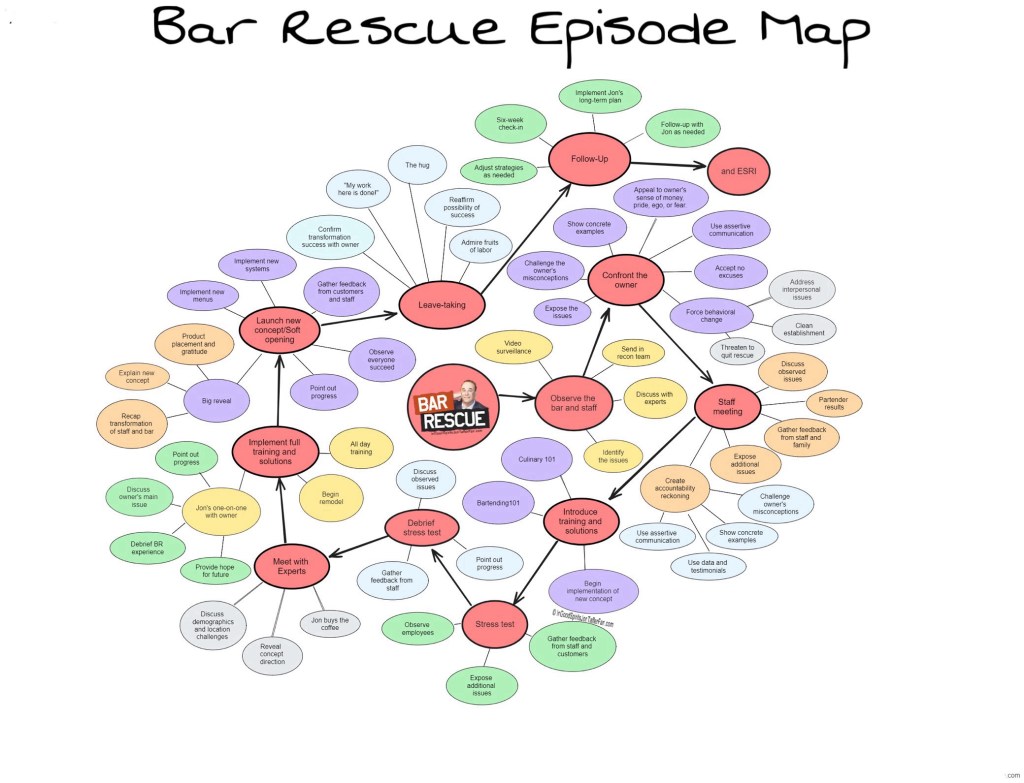
Jon has this process down to a T, too. In just four days, he achieves as much transformation as anyone possibly could. His approach is so effective and consistent that fans of Bar Rescue can practically play along. There’s even a subreddit dedicated to Bar Rescue and Jon Taffer where fans role-play Jon, mimicking his signature lines and behavior, responding to posts with things like, “This is why your wife left you,” “You’re gonna KILL somebody?” and “Who here hasn’t gotten a drink yet?” This level of engagement stems directly from Jon’s systematic methodology—every intervention is a carefully orchestrated series of steps, from the initial confrontation to the final reveal. Fans aren’t just mimicking Jon—they’re celebrating the beautiful predictability of a man who has turned bar rescue into a science and righteous indignation into an art form, like seriously so.
What sets Jon apart is his fundamental belief in the power of systems. While most people have a consistent personality over time, Jon’s persona on the show arises from a deliberately engineered approach that embraces systematic solutions. Every aspect of his work—from his signature stress tests to his staff training protocols—reflects his core philosophy that properly designed systems create success. His behavior might appear formulaic, but that’s because he’s identified what works and turned it into a repeatable process. This systematic thinking isn’t just a professional strategy; it’s become the essence of who Jon is, making his identity both authentic and remarkably effective.
But here’s the interesting part—there’s actually some legit social science behind why Jon’s approach works so well. And Jon loves him some science, both bar science and behavioral science, so let’s take a look at how it works on the show by talking about reciprocity. Just like almost everything in this post, Goffman’s work on social interaction provides the basis for my analysis.
Goffman says that part of human behavior is to engage in supportive behavior (or “face-work”) in order to foster social harmony and trust as well as to get our needs met. Face-work is designed to help us maintain a good social image by showing we understand communication rules and social behavior, including one of the most important: The rule of reciprocity, which means we give and get in what we and others think is a fair way in order to be seen as a competent person in social interactions. When we receive something from another person, we want to reciprocate it—a kind of unspoken social tit-for-tat arrangement. This is why you feel really uncomfortable if, for example, someone unexpectedly gives you a Christmas present and you don’t have one for them. It’s not as specific as if I showed up with a bottle of Taffer’s Browned Butter Bourbon and you give me a bottle of Grey Goose or something; it’s just the general act of giving in a relatively fair way that we’re talking about—you know, you thought of me and I thought of you type of thing.
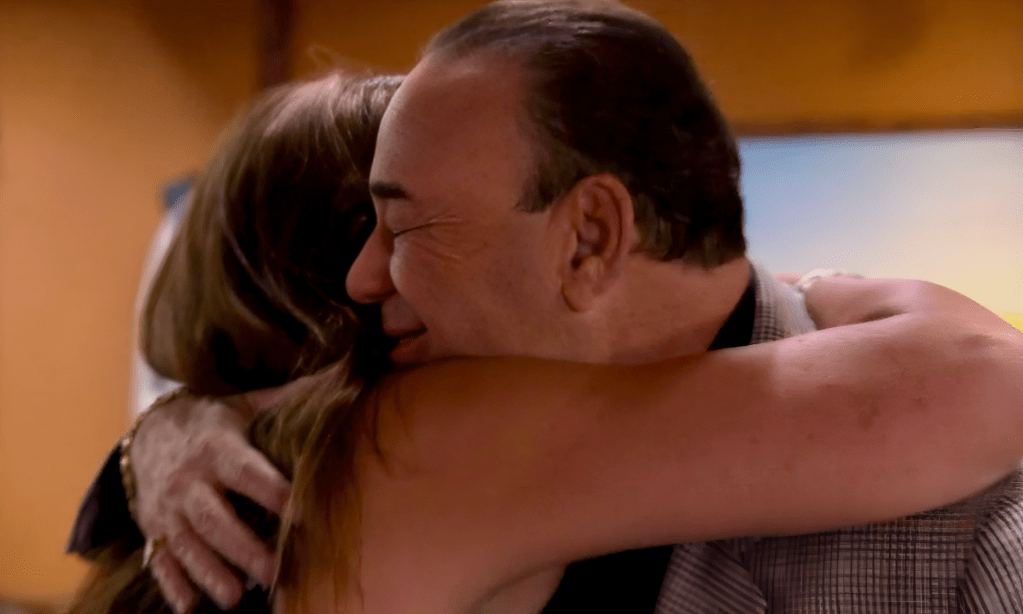
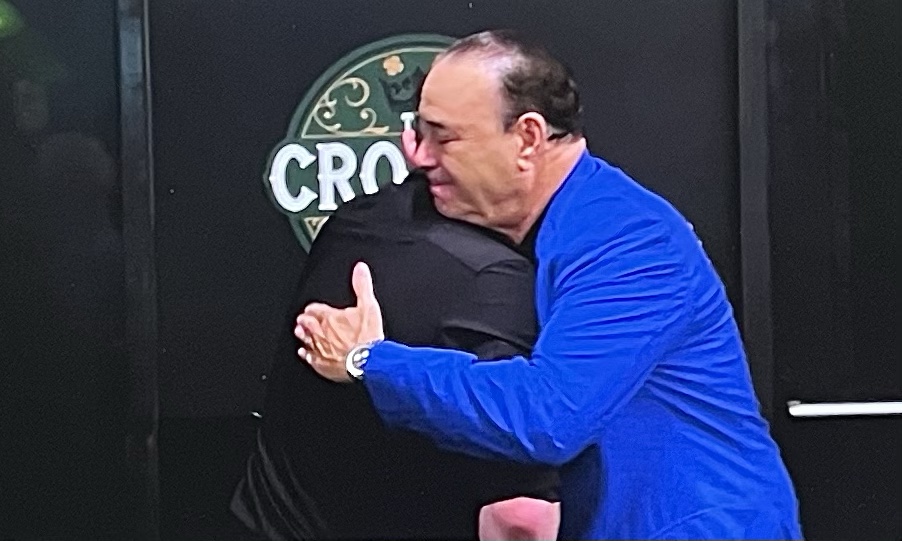
This reciprocity shows up all over Bar Rescue on reveal night when owners say stuff like “I want to do my best for Jon” or make those heartfelt promises that they are going to be successful because Jon gave them a wonderful gift that is now theirs to make something of. They recognize Jon gave his heart and soul for them, even if as viewers we think it’s all TV fun and games, and now they want to return his gift in kind. But here’s the thing that really gets me—all Jon really wants from the owners is for them to be successful and to give him a hug. I think this is a testament to his belief in the power of small business to lift up communities and make our economic system work for everyone. Plus, what could they possibly give him that he doesn’t already have, except to receive his gift and make something of it?
So far, I’ve tried to show you that challenging someone about their identity makes waves, and making waves puts your own identity at risk. Probably one of the quickest ways to be labeled an asshole is to call people out at work, where hits on their identity can impact everything from how the boss sees them, their earning power, and how their family sees their competency as a provider. When a person’s family is involved, things get even trickier. Calling people out is emotionally brutal for everyone involved, even the person doing it.
Jon always tells us what he is doing and why. The things he says show how brilliant he is at face-work. For instance, Jon tells us the identity of “team” is better than “family” at work because it allows owners to “bench” non-performers even if they love them. What he doesn’t say is the unspoken part: “in a softer and kinder way than it would be if you canned a ‘family member,’ which is pretty much asshole behavior in everyone’s eyes.”
This advice shows how much Jon understands face-work and how the language we use to talk about people matters. By sharing his insight, he’s simultaneously doing his own face-work, showing us he’s thoughtful and kind when it comes to people’s identities. He’s saying “I’m competent, caring, helpful, and generous,” even while he’s willing to risk being seen as an asshole to help the owners succeed with firing their non-performing family members. Oops, I mean, “benching their low performing team members.” See for yourself how Jon does this in the clip below from “S9E2: Wildkats Wild Collapse.” Jon is extremely tactful in helping manager Kyle Davis accept that his contributions aren’t really helping his friend while simultaneously providing an alternate way for Kyle to contribute in ways that play to his strengths.
Jon consistently reveals his thought processes and rationales on the show, not only showing how brilliant he is but also making it clear his actions revolve around everyone’s personal well-being and business success. Yet people dismiss these explanations, claiming he’s just chasing ratings or doesn’t know any better, that being an asshole is simply his nature. But Jon himself acknowledges the social implications of his approach, often telling owners point-blank: “I act like an asshole. You are an asshole.” This distinction is crucial. Jon is fully aware his behavior violates social norms, yet he willingly makes this sacrifice.
This deliberate approach aligns perfectly with Jon’s broader theory of “reaction management,” which he discusses in his book Raise the Bar. Just as he believes businesses must focus beyond mere service to create thrilled, loyal customers, Jon himself carefully manages reactions on multiple levels. He’s not just trying to shock owners into change; he’s orchestrating responses from everyone involved: Owners, staff, viewers, and even critics.
When Jon publicly confronts people’s failures, especially regarding health and safety violations, he’s not just being an asshole for entertainment. He’s applying his deep understanding that everything he says and does must consider his various audiences’ reactions. This isn’t just face-work; it’s reaction management elevated to an art form, backed by decades of experience in transforming people and businesses.
Jon’s Personal Identity Management Strategy
“Jon’s intention is crucial to understanding whether he is a good guy or an asshole.”
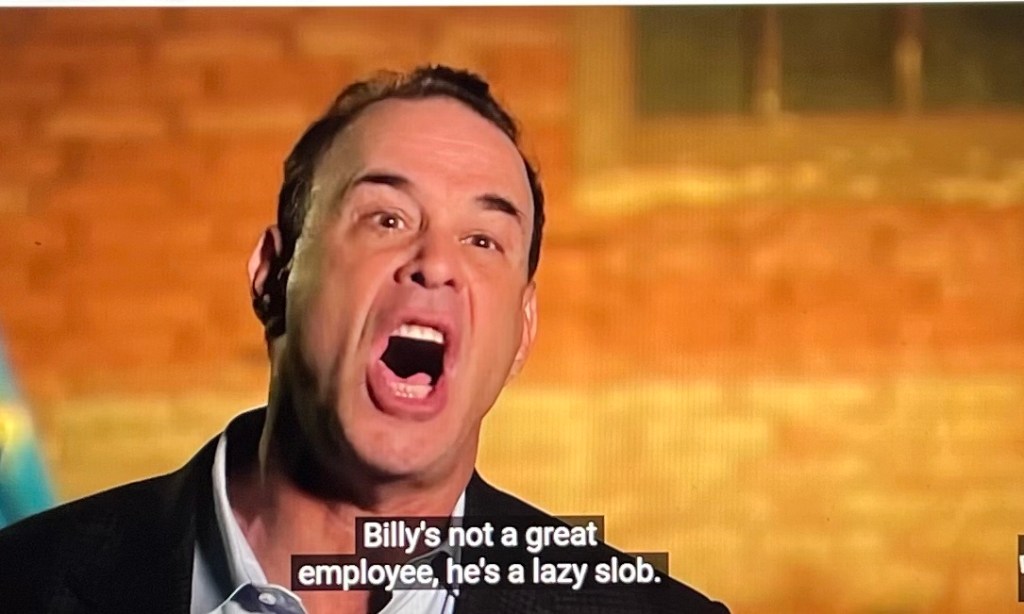
Consider the confrontation with Brian, one of the owners from “S4E2: Thugs with Mugs.” When Jon discovers Brian’s negligent behavior, he invokes his own crew as “family” and unleashes a blistering critique. Jon’s moral principles shine through. He detests theft but is truly outraged by endangering others’ safety. Through a grueling confrontation that includes Jon allowing others to join in attacking Brian’s self-concept, Jon systematically breaks down Brian’s denial about being a “hardworking owner” just because he’s at the bar a lot.
Viewed in isolation, this scene might paint Jon as a real asshole. But understanding his intent, as he tells it to us in the beginning of the scene, transforms our perception of what Jon is doing. Jon isn’t performing for ratings; he’s fighting to save Brian, the bar, and everyone involved, including his crew, from the consequences of Brian’s destructive behavior. The lens through which we view Jon’s actions, either as a dedicated rescuer or an attention-seeking asshole, depends entirely on what we choose to see.
Jon’s mastery of identity management also reveals itself in how he’s handled his public image. Rather than fight the “asshole” label, he’s claimed it with a humorous, almost proud spin. This brilliant strategy serves multiple purposes: It keeps viewers engaged, ensuring the resources needed for rescues and allowing Jon to continue his real mission of transforming failing bars and their owners. While Jon has undoubtedly benefited from this reputation, viewing it as his primary motivation misses the deeper truth evident in every emotional breakthrough, every transformed business, and every grateful hug at the reveal.
The Reciprocity of Identity: Our Role as Fans
As fans of Bar Rescue, we have a choice in how we receive and reflect Jon’s identity. When we dismiss him as just an asshole, we miss the intricate details and careful consideration that shape his approach, but we don’t have to be like that. We have a chance to participate in reciprocity with Jon. Remember, identity management is a two-way street. Just as bar owners eventually see past Jon’s tough exterior to recognize his genuine commitment to their success, we as fans have the same opportunity. But unlike the owners who get to experience Jon’s transformation process firsthand, sadly, we only see the carefully edited moments of confrontation that make for compelling television.
The fuller picture of Jon Taffer exists beyond Bar Rescue‘s dramatic moments. It lives in his many podcasts, his books, and in the countless, grueling, behind-the-scenes hours he dedicates to every rescue. Jon is a man who has built his life around helping others succeed, who cherishes his family, and who approaches his work with methodical care and genuine concern.

Perhaps we owe Jon the same kind of identity transformation he offers bar owners. After all, he’s given us years of entertainment, business insights, and demonstrations of what it means to care enough to do the difficult work of calling people out in extremely face-threatening ways. The least we can do is see him for who he truly is: Not just the guy who yells about raw chicken contamination, but an illustrious figure who has mastered the art of helping others by temporarily sacrificing his own image.
Jon’s Legacy
Jon knows that people think of him as an asshole, and he has strategically embraced this identity as part of the price he pays to be successful in his rescues and to provide them in the first place.. His approach rests on three essential principles:
- Breaking Denial: Owners and their enablers are trapped in a system of failure. Only aggressive intervention can shatter this comfortable denial.
- Time Pressure: With just four days to transform the business, Jon must deploy his “big guns” immediately to catalyze change.
- Commitment: Jon pours his heart and soul into helping those he’s chosen to rescue—if we’re gracious enough to see past his methods to his genuine intention and to equivocate his identity as a decent human being with his soul.
According to an article in GQ about his 250th episode, Jon admitted, “I don’t want to be thought of as a screaming guy! I want to be thought of as a helpful guy.” As he approaches 70 this year, his identity concerns have evolved from when Bar Rescue began in 2011. With a grandson born in 2019, Jon’s legacy likely weighs more heavily on his mind.
As his primary audience, we fans have the power—and perhaps the obligation—to help reshape his public identity. This requires more than passive appreciation; we must actively embrace and promote his true character as a force for good. Such reciprocity would honor the joy he’s given us over thirteen years of transforming lives and businesses.
Jon’s identity as an altruistic man willing to embrace being seen as an asshole for the greater good is the cornerstone of how I see him, and, to me, it solidifies his legacy as a transformative force in the world of business and as a truly illustrious human being.
Jon’s masterful balance of challenging owner’s self-image and using face-work to build them back up reveals a deeply compassionate man willing to sacrifice his own image for others’ success. His brilliance lies in transforming identities quickly while leaving everyone in good standing—except, ironically, himself. This willingness to embrace an identity as harsh as “asshole” for the greater good cements his legacy as both a transformative force in business and as a deeply committed, genuinely helpful, and truly illustrious human being.
Since you’ve asked how I can see Jon as illustrious, let me put it plainly. Jon has shown the world that true greatness lies not in perfection, but in the willingness to risk being misunderstood and even bad-mouthed for the sake of helping others rise. As he points out in a more modest way, his legacy isn’t just about the bars he’s saved—it’s about the lives he’s changed. I would add it’s also about the hearts he’s inspired. From my point of view, Jon is both illustrious and extraordinary, and we all should be thankful he has given us the gift of seeing what it means to truly care.

 In Good Spirits
Leave a comment