
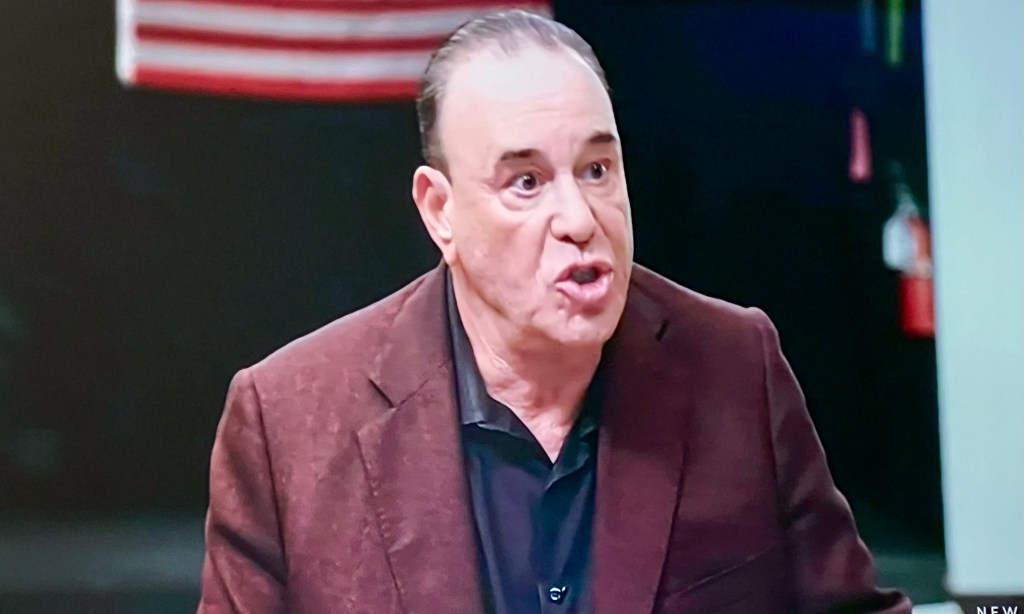
In my most favorite episode of Bar Rescue ever, Jon draws on his admiration for veterans to pull out all the stops for Philip Smith, an Army veteran who is $3.5 million in debt after only two years of owning Arnold’s Lounge in St. Augustine, Florida. Philip is a proud father who overzealously purchased Arnold’s when he had very limited bar and restaurant experience. He hired general manager (GM) Vickie but has not set her up for success. A majority of the difficulties at Arnold’s are similar to the issues at every failing bar—the owner doesn’t have experience or knowledge, the GM is overworked, the kitchen staff are untrained and unsanitary, and the employees are not respecting the establishment, the standards, the chain of command, and/or the owner’s money but are considered “family.”
One of the problems this bar has that other bars have not had is bartender Marc, the one from this episode’s title “Miss the Marc,” the one who has 25 years of experience and thinks having to make an order for eight drinks is “chaos.” We are introduced to Marc in the lengthy opening scene where he minimizes the work of a bartender and declares “pour counts are silly,” although he seems to think he is telling us true and important information. My initial horrible impression of Marc is reinforced when Jon enters the bar during recon and asks Marc, “Where’s the owner?” Marc provides the worst excuse ever, “I just work here,” although he does go looking for Philip. Later, Jon calls Marc a shitty bartender and apparently informs his team of this judgment in hopes that Philip will take charge of his establishment and fire Marc.
Little did Jon know the actual chaos firing Marc would cause. Marc is so underprepared for the stress test, he tells us that he didn’t know what was going on at all for five minutes of it. Vickie has complained that the bartenders don’t listen to her authority or training, and it becomes evident that the bartender she is talking about is Marc and that Marc needs to be fired. When Philip and Vickie tell Marc he’s being let go, Marc fights back by telling them he can’t be fired because he’s at work. Then he says he can’t be fired because he’s quitting, but he won’t leave because he is also working. He calls Philip an asshole and says he doesn’t need him, then refuses to leave. Bartender Patrick tries to mediate the situation and offers to drive Marc home, but the police are eventually needed to usher Marc off the premises. As Vickie later recalls, “Marc was a shit show” during the stress test, and he is one afterward, too.
Philip explains in a candid moment that he hasn’t fired anyone because he treats them like family; however, Jon has always said that one’s business is better off if employees are treated like a team, not like family because we’ll accept family’s shortcomings but need to bench ineffectual team members. This lesson seems to sink in with Philip, who is even more focused on solving the business’ profitability issues. He tells us, “This isn’t a playground. It’s either come to work or don’t come at all.” Firing Marc proves to be a positive decision for Philip, and everyone steps up when the cancer in the group’s attitude and cohesiveness is gone.
Jon turns his attention to determining the financial issues at Arnold’s when he sits down with Philip and Vickie at the end of recon. Oddly enough, while discussing and diagnosing the financial issues, it becomes clear that Philip and Vickie do understand important aspects of the business, like food costs, and have identified some problems. However, the solutions they implemented are insufficient and continue to contribute to their problems. Jon rebukes them for their stupidity.
The instance Jon identifies as exemplary of their inadequacy involves selling steaks at a loss. Philip and Vickie know they are selling at a loss but don’t fix it because it is their most successful night otherwise. As Jon realizes the extent of the issue, he changes his advice from simply, “Stop selling the steaks!” to the slightly more sophisticated, “Re-engineer it. Build something that’s profitable. Smaller steak, bigger plate, a different cut.” Then in a fit of exasperation at what seems to be a complete lack of initiative by an “army man,” Jon confesses to Philip, “If you weren’t a vet, I’d walk the hell out of here.” Then he shouts obscenities as he barrels out the door with a forceful double-fisted shove.
The next day, Jon tells us, “There’s a lot of work to do here at Arnold’s between the staff not listening and leadership not leading. It’s a complete mess. But there’s a lot of bars that need rescuing and right now I gotta run to another bar that I’m rescuing that’s in crisis mode.” Then, we are introduced to Ashish Alfred, an innovative “chef by trade, restauranteur by profession” who shows up on set with BDE that doesn’t quite match Jon’s level of swagger but is still palpable.
Ashish is there at Jon’s request to fill in for Jon, and while I don’t want to like him, I do. His communication style resembles Jon’s commanding, no-nonsense style, and his criticisms are spot on and harshly true. He shuts Marc down during the staff meeting when Marc refuses to admit he has issues with overpouring and tells Philip and Vickie the most effective way to stop employees from overpouring is to “Fire them!” During stress test, when checking in on customers with a burnt hamburger, Ashish is as unfiltered as Jon, commenting, “My dead grandad’s nuts probably look better than that.” Then he takes the briquette into the kitchen and stops Chase, the cook, in his tracks. “We don’t send out shit because they’re not going to eat it anyway. And when they don’t like it, not only do they not come back, they tell all their friends not to come in here either. This is what happens when we rush it. And this is what happens when we don’t have all the right processes, and they don’t have all the stuff they need to succeed.” Although he isn’t Jon, Ashish is a suitable substitute and makes it easy for me to imagine what Jon was like when he was younger.
I am not the only one who notices Ashish’s approach and insights are similar to Jon’s and can understand why Jon trusts him so much. Mike the bartender tells us candidly, “When that man walked in instead of Jon, it was a bit of a relief, but once I realized this guy knew what he was doing and he was going to be pretty much coming at us the same way, I feel like I got anxious and nervous, one hundred percent.” But Mike steps up and busts ass during the stress test; Marc does not. Ashish approves of Philip and Vickie’s decision to fire Marc and shares his perception about the situation from his professional vantage point, “You know, Phil, I really wanted to see you come into your own as an owner, take command of your business, make some difficult decisions, and, for me, man, it’s really, really impressive to hear that you did what needed to be done. It makes me—and I know it’s gonna make Jon—feel really good about what we’re doing here.” Then he continues to support their transformation with some wise advice, “Let me tell you something. This business is hard enough. Don’t make it harder by having dickheads around you that don’t respect you and don’t understand that it’s your money, your life on the line, your career on the line.”
Philip expresses appreciation for Ashish’s encouragement. Ashish’s respect for Philip’s actions and Ashish’s belief that Philip can improve the profitability of Arnold’s are making a difference in Philip’s attitude, motivation, and skills and giving him hope again. Ashish takes his work seriously. He tells us, “When Jon Taffer picks up the phone and tells you he needs you, you drop whatever you’re doing and you show up.” He turns his attention toward the bar remodel and reinforces his point with the construction staff, “We gotta show up big for these guys. We’ve gotta show up big for Jon.”
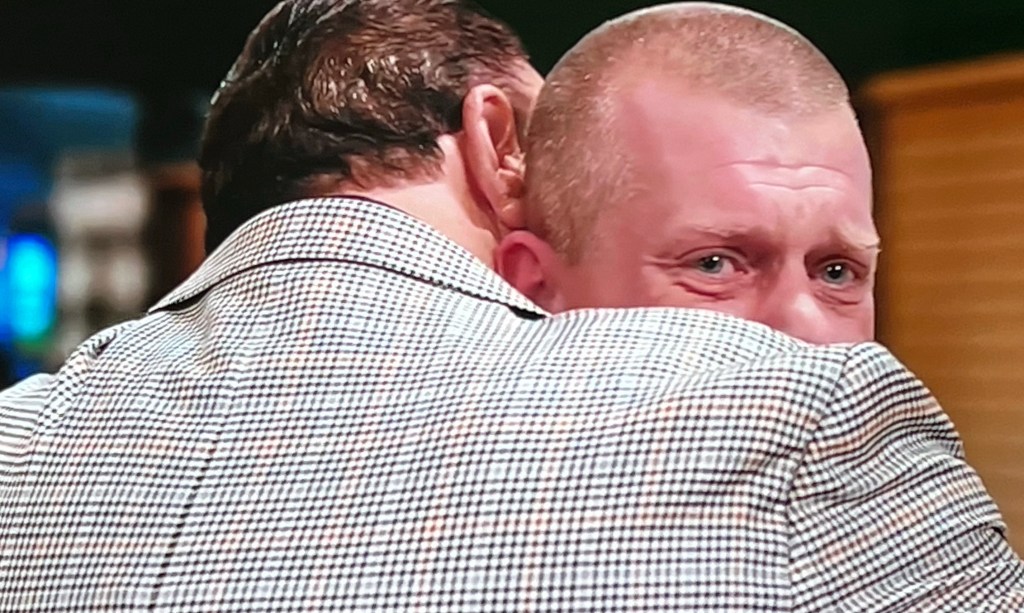
Jon returns for the relaunch of the newly updated Arnold’s Lounge. He is proud of Vickie for stepping up in her role as GM. He saw a lot of courage when Philip and she fired Marc. He is pleased with what Ashish helped him accomplish. The energy at the relaunch is strong. All the customers are smiling and laughing, having a great time, and Philip is feeling a sense of relief and hope. He is a man of few words, but the tears say it all. Jon tells Philip, “You know, when I heard about you as a vet, who has served me, I welcomed the opportunity to serve you.” Then he asks Philip if he fulfilled his promise to him to set him up for success. Philip manages to speak through his tears, “I just don’t want you to go.” Jon lets Philip’s appreciation for him penetrate through his “this is what I do” exterior and actually hit him in the heart. He embraces Philip in one of the most touching Bar Rescue hugs I’ve ever witnessed. I remember hearing Jon say that at this point in time the hugs at the end of Bar Rescue mean as much or more than the paychecks, and as I witness him accepting Philip’s gratitude, I believe him.
Then Jon and Ashish take a final look at the work they accomplished together. As usual, Jon is the quintessential professional and gives Ashish the credit, “Look at that, buddy. You did it. Good job.” As the show ends, I can’t help but imagine Jon in the role of Ashish, a 38-year-old consultant working with one of his idols while on the road to his own illustrious success. My heart melts with a similar sentiment for such a noble, altruistic, and principled man doing great work helping others, “Good job, Jon. Good job.”

I invite you to consider and share your answers in the Comments: What are your thoughts about Ashish? Does he remind you of Jon?

 In Good Spirits
Leave a comment